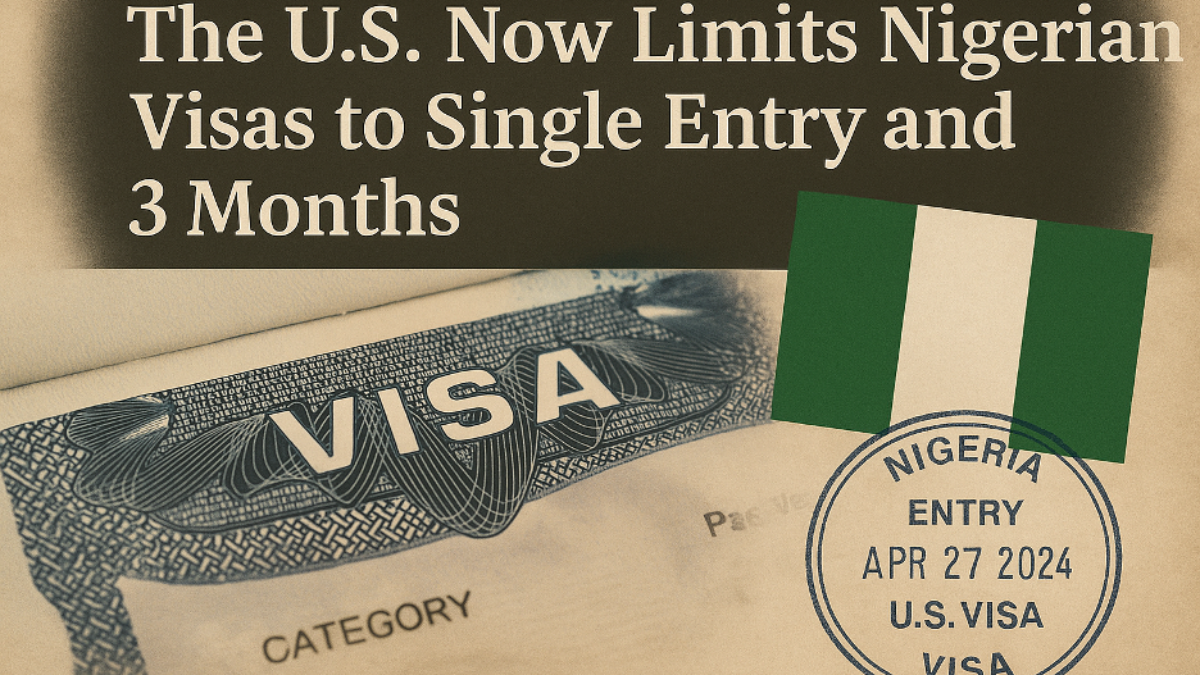
In a move that has sparked concern across Nigeria, the US restricts Nigerian visas to three months—shortening the duration of validity of visas issued to Nigerian citizens as visitors to three months and to one entry. The policy shift, effective July 8, 2025, targets non-immigrant visa categories, such as B1/B2, which are commonly used for tourism, business, and short visits by relatives.
Prior to this, Nigerians were granted multiple-entry visas to last up to five years, which allowed for going back and forth without needing to reapply. That privilege is no longer available. According to the U.S. Department of State, this is part of the country’s policy of reciprocity where visa durations seek to reflect how the host country treats American citizens in the host country.
Though the explanation sounds statesmanlike, all Nigerians see the change as a troublesome setback to global mobility, especially when international travel and cooperation are at the heart of economic and intellectual progress.
Why Was the New Policy Introduced?
U.S. officials indicated that the new visa policy is in response to a number of issues, primarily visa overstays, minimal documentation requirements, and a lack of enforcement of immigration inspections by the government of Nigeria.
Among the key issues raised was Nigeria’s relatively high rate of overstay on visas. People who insist on not leaving once their visa has expired have been a bane of U.S. immigration for a long time, and Nigeria features highly among them. The U.S. also had misgivings about the integrity of Nigeria’s document issuance process, right from passports to birth certificates, and the possibility of fraud and abuse.
Moreover, in the visa reciprocity policy, there must be a level playing field. Nigeria already issues five-year, multiple-entry visas to Americans, but the U.S. has contended that the policy needed revision on the basis of internal immigration reports and national security issues.
Who is Affected by the New U.S. Visa Policy?
This restriction primarily impacts:
- Tourists and Business Visitors (B1/B2): Those who previously used long-term visas for short business meetings, holidays, or family reunions will now have to reapply every time they travel. That means additional expense, paperwork, and potential delays.
- First-Time Applicants: People who previously had planned to travel for weddings, graduation ceremonies, or seminars won’t be able to come back on the same visa anymore. As soon as it is issued, it becomes outdated.
- Regular business travelers: In this scenario, the Nigerians in business, commerce, and academic collaborations must rethink their travel frequency and budget. This will also decrease spontaneous business possibilities.
- Family visits: In this scenario, many Nigerians who have loved ones in America due to their extensive diaspora will notice the burden of the change. In most situations, coming for three months at a time will not enable them to take active part in family benchmark events or other emergencies.
It’s worth noting, too, that this policy will not be retroactive. Existing visas issued before July 8, 2025, remain active on their former terms until they expire.
Economic and Travel Consequences
This change affects more than individuals, it has diplomatic and economic consequences.
- Entrepreneurs and Small Business Owners: Nigerian entrepreneurs spend much of their time on the road for expos, investor meetings, or maintaining client relationships. The cost and hassle of multiple applications may kill opportunities.
- Academic and Cultural Exchange: Although student visas are not yet affected, the shift will discourage Nigerian engagement in short-term exchange visits, training programs, and workshops in America. It also sends the message that access is being curtailed.
- Family Ties and Mental Health: In a country where family ties run deep, having the freedom to cross continents to attend weddings, funerals, or holiday celebrations is of utmost concern. Restricting that freedom dissolves cultural and economic ties between countries.
- Travel Agencies and Airlines: Limited Nigerian travel to the United States might also have negative effects on airlines, travel agencies, and ancillary industries that profit from transatlantic travel.
This visa clampdown would have a ripple impact across industries, from education to technology, and even the arts.
Nigeria’s Response
Nigeria has not taken the new ban lying down. The government, through the Ministry of Foreign Affairs, has addressed it and initiated diplomatic talks with the U.S. to renegotiate the agreement.
Authorities argue Nigeria has continued to honor its agreement by issuing five-year multiple-entry visas to the American people and believes it is entitled to the same reciprocally. A presidential spokesman stated that although Nigeria honors the right of every country to set its visa policy, the insistence on validity as well as the reduction of access undermines long-standing bilateral relations.
So far, Nigeria has not made any retaliatory moves, which means that it is seeking a diplomatic solution and not escalation. Success with all these initiatives can depend on how well Nigeria is able to address some of the concerns raised, particularly documentation and enforcement of immigration.
What Nigerian Travelers Should Do Now
If you’re planning a trip to the United States, this is what you should do under the new policy:
- Be Time-Smart: Since the visa is just for three months now, coordinate your travel and return within that timeframe. Avoid open-ended bookings.
- Avoid Repeated Visits: If you need to visit again, you’ll need to go through the entire visa process again. Package travel is convenient.
- Check Documents Carefully: Ensure that your documents are brief, accurate, and consistent, especially names and dates between your certificates and IDs.
- Show Strong Home Ties: To avoid being rejected for a visa, show that you have a stable job, family, or company that ties you back to Nigeria.
- Watch for Updates: Policy may shift over the coming months. Watch for official word from the U.S Embassy and Nigerian Ministry of Foreign Affairs.
By taking action and being well-prepared, travelers can reduce frustration and adapt to what now lies ahead.
Global Trends in Visa Policy
This is not the first time that the U.S has modified visa conditions in the wake of immigration patterns. Nations such as Ghana, Ethiopia, and even certain Asian states have had tougher admissions policies in the past as well.
In today’s age, immigration policies are more politicized, driven by security and data. Governments are reconsidering whom they let in, for how long, and on what terms. Some of these concerns, naturally, are valid, but some could be expressions of broader geopolitical shifts and realignments of power.
For up-and-coming nations, the burden is usually experienced more acutely. Visa charges are more costly compared to what they earn, and rejection is a certainty even when all the credentials are in order.
For Nigeria, the move highlights the need for it to strengthen its passport infrastructure, immigration enforcement, and diplomatic influence. It’s also a reminder that access to the world is never guaranteed, and that states must work hard to acquire travel rights for their nationals.
Conclusion
The American visa restriction on Nigerians isn’t just paperwork, it’s an issue of access, dignity, and power relations between nations. While the new policy doesn’t shut out travel completely, it significantly narrows the door for Nigerians who rely on free movement to keep businesses alive, learn, reunify with family, or simply explore the world.
While both governments are still negotiating in the dark, the average Nigerian traveler is now forced to prepare to go to America with even more planning, precision, and tolerance. The best hope is diplomacy, mutual understanding, and respect between the two nations. Meanwhile, the message is clear: the U.S door is still open but just barely.