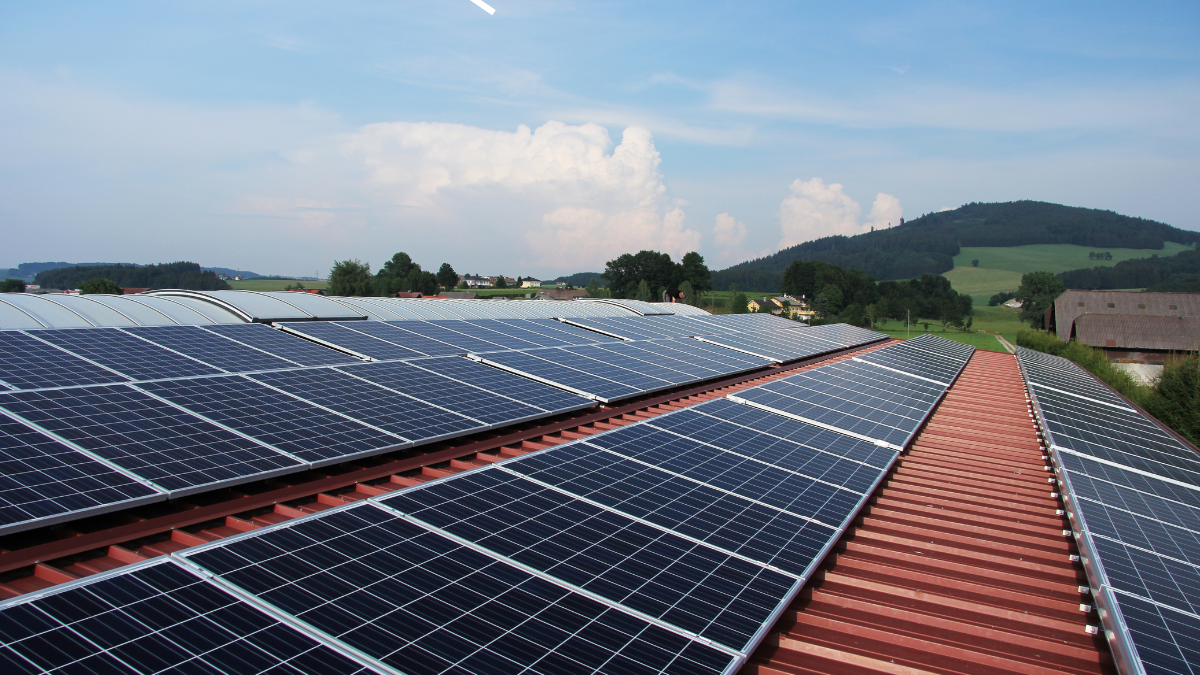
When the news about the staggering ₦10 billion budgeted for solar system installation in the Presidential Aso Villa broke out, the ‘energy’ of the heat it generated from public opinions and criticism was figuratively close to the 30,000 Megawatts (MW), which is the amount required for Nigeria to attain self-sufficiency in having uninterrupted power supply for the nation. Unfortunately, there was no way to convert that ‘energy’ generated from those lamentations and mixed reactions of the citizens into electric megawatts to augment the shortage of the supply in the power sector.
Power supply has long been a recurring decimal in the equation of Nigeria’s growth and development. Many governments have come and gone but the problem is still persistent. Whether because it is too difficult to pull out like a stubborn grass or a result of the failure of previous and current administrations to cut off the epileptic problem of power supply remains a mystery.
With a dense population of over 200 million people, it is quite surprising that Nigeria, one of Africa’s largest economies and most populous countries on the continent, is still struggling to attain an adequate power supply in the 21st century.
The primary source of electricity generation in Nigeria is from fossil fuels which accounts for 86% while hydro accounts for the remainder 14%.
As hydropower supply of electricity is not only one of the oldest, but also a renewable and cheap source of power generation, Nigeria has been able to capitalize on its use, thanks to the availability of water bodies like the River Niger that streams down from the North-central region and merging with the Benue river at a confluence before narrowing down to the Niger-Delta where it disintegrate into tributaries that find their way into the Atlantic ocean.
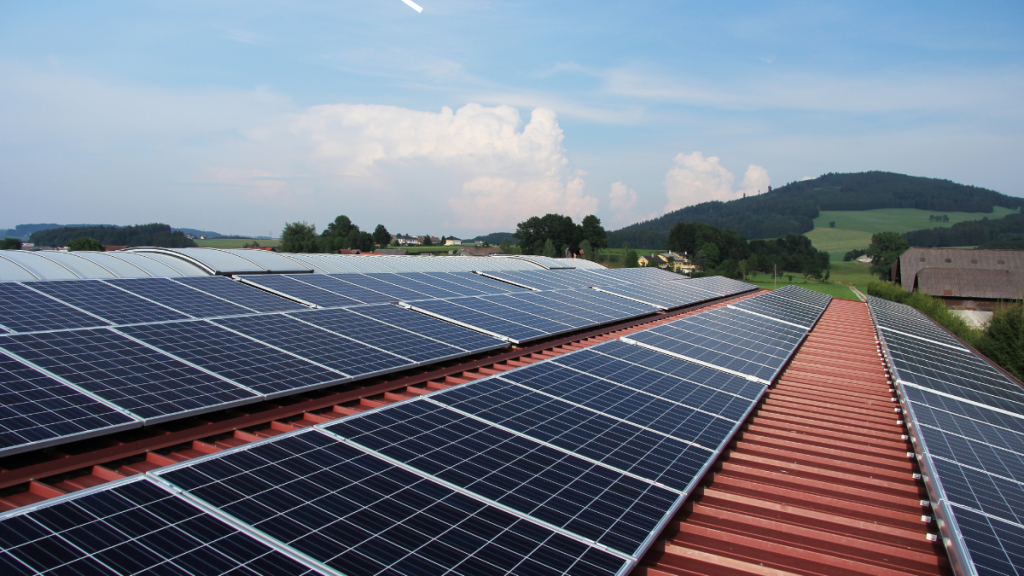
Hydropower, when compared to other sources of power supply, is Nigeria’s cheapest source of electricity with an average charge of 3.671kilowatts per hour (kWh). As it stands, only about 9 out of 20 power plants are connected to the national grid and they are responsible for 71% of electricity generation in the country. This clearly depicts under utilization of the country’s power potential resources available with barely 50% functioning.
The current power capacity generated by all of the active power plants fluctuates between 4,000 – 5,000MW. Statistically, this figure is just 50% out of the potential 11,000MW yet to be attained. When compared with the 30,000MW needed to power the nation with stable electricity supply, the ratio is 1:6.
Sadly, to add more fuel to the engulfing flame, the national grid collapse has been happening as intermittent as the poor power supply in Nigeria. In 2022, it collapsed twice within a week. In the years that followed, it maintained its ‘consistency’ in collapse even as recent as 2025. How ironic that the national grid’s collapse tend to be more consistent than the power it is supposed to generate?
Taking the Bully by the Horn
₦47.1 billion! Rings a bell? That’s the amount the federal government (the presidency) is said to be spending annually on its power supply.
It is no longer news that in 2024, something unprecedented happened when the Abuja Electricity Distribution Company (AEDC) issued a Notice of Disconnection for the Presidential Villa stating that it was owing ₦923.87 million. To imagine that the federal government was also struggling to pay its electricity bills was probably the last straw that caught in the drowning state power supply had been terrible.
Some Nigerians may have an abusive relationship with numbers, but there is a limit to how far that loophole can be exploited to explain an allocation of ₦10 billion for solar installation in the Presidential Aso Villa.
To further cut the wound open, the 10-day Notice included a whooping 86 government Ministries, Departments and Agencies (MDAs) also owing the AEDC within the ambit of that time.
A defense mechanism was launched by the Director-General of Energy Commission of Nigeria (ECN), Mustapha Abdullahi, who absolved the President of any wrongdoing by raising issues of how unsustainable the spending of billions was on electricity bills of the federal government in the Presidential Aso Villa. He also made a brilliant and succinct argument on the benefits of the ₦10 billion solar plant as a means of reducing the cost of governance, providing jobs, promoting clean/renewable energy as part of Mr President’s agenda to diversify energy sources to reduce the pressure on the grid.
All points are valid, but the question remains: Whose interest does this decision favour? The government or the masses? Who is serving whom? What is the taxpayers’ money used for?
Apart from the insensitive timing of the project which many citizens have lamented about in a time when per capita income is nearly on an all-time low vis-a-vis cost of living (forget about the misleading nominal value of the Naira), it looked like a narcissistic entitlement disguised under the pretext of the seat of government as an imperative structure and organisation more deserving than any other for steady power supply. Further addendum will include its necessity for the smooth running of government.
But in there also lies further questions: What happened to all the money previously budgeted for the electricity bills annually that were apparently not paid to the AEDC that resulted in their accumulation into a heap of disgraceful debt piled and served for all to see? What and how are the appliances used in the villa that it consumes a lot of energy which amounts to billions of digits in a single year for a government that goes out to borrow funds? Why does the federal government think it is more entitled to enjoy uninterrupted power supply over the masses that voted them to power? Isn’t what is good for the goose also good for the gander?
Own Goal
The sudden action taken by the federal government for the solar installation, as significant as it may be made to seem, is still like conceding an ‘own goal’ in a football match by the government who promised to fix the power sector to ensure stable and reliable power supply in the country as part of its campaign manifesto.
The body language hypothetically depicts the federal government leaving a group chat on social media it created, which comprises of all stakeholders in the country, and then creating another one for itself. A clear message that everyone is now on their own and will have to find a way to sort themselves out, like the presidency has done, leading by ‘fantastic’ example, (of course with taxpayers’ money).
It is not something new, because in the same vein, water supply has been poor and only people who could afford it resorted to digging boreholes in their homes. Talk about security and defense and how private security set ups have been employed by communities to do their bidding against the gentlemen on the highway or kidnappers, hoodlums and other miscreants that have perforated the atmosphere of peace, no thanks to the loose and porous security response in times of their need during crisis and insurgency.
And now that the federal government has left the power supply group chat, it means if the national grid collapses, it wouldn’t feel the impact and therefore, will not be quick to respond to address the issue since it is no longer affected. Where does that leave the layman who can’t afford a bag of rice, let alone a solar installation? I will tell you where, in the darkness!
One by one, the federal government is failing to take up the mantle and falling short in providing some significant basic amenities like; water supply, provision security for maintenance of peace and order, power supply are some social goods grossly lacking or inadequately provided in many areas of the country.
Solution
Long story short, like the question was posed earlier; isn’t what is good for the goose also good for the gander?
Yes, of course, why not?
The ultimate solution would be to augment the power plants to reach the 30,000MW self-sufficiency level for all and sundry to enjoy. Simple and straight forward.
But if not possible, due to hesitation by government’s lack of willpower to make it happen, then the second option would involve dipping into their federal government’s budget and pockets to solve the problem.
How?
Based on research and consultations, with a modest budget of ₦2.2million, a solar system of 2.5kVA/48V comprising of two tubular batteries, an inverter and 4 solar panels (300W-400W) should be able to carry just the basic home appliances like fans, television, a fridge, blender, sound system, lighting points, bulbs and sockets.
The mathematics here is that if ₦10bn (which is the amount the federal government decided to use for installation of solar system in the Presidential Aso Villa) is divided by cost of the modest solar system package (₦2.2m) then, it will give us 4,545; which is the number of individual households the budget can cover for a solar system installation package used hitherto.
If we do the same calculation above for ₦10bn budgeted for Presidential trips and another ₦10bn used for renovations of President’s home in Lagos, it will increase number of individual households that can be powered by the solar system from 4,545 to 13,635.
And when we introduce the National Assembly members into the mix and divide the total amount allocated for their new SUV’s which was about ₦57.6bn, and then divide it by ₦2.2m for the cost of the aforementioned solar system, it will be about 26,181 households to benefit from it. This will bring it to a sum total of 39,816 households (when 13,625 is added to 26,181). This is approximately 40,000 households to enjoy free solar installation with adequate and equitable redistribution of resources streamed down to the average Nigerian.
If the momentum of wastage elimination is kept up, in 12 years, about 480,000 households would have been enjoying steady electricity (whilst combining it with the supply from the national grid). Imagine how many households could be powered if all wastage and leakages are blocked from the economy with a decent and modest budget allocation structure; the numbers will increase far more, probably stretching into millions of households to be powered by the solar system.
This calculations is not a show-off of statistics for pleasure. It is about elimination of government extravaganza and wastage concentrated in hands of those in higher positions in some sections of the society whilst the others struggle to survive. It is a revelation of the equivalent of what the fewest of people enjoy at the expense of the majority and possibility of what the outlook will be when resources are fairly distributed in the society to the laymen or average households in country without bias or favour.
Power supply is like the internet connection of production in the 21st century, and the more it fluctuates, the more production is affected. The most industrialized countries with the largest production scale in the world have long eliminated the problem of poor power supply. Nigeria needs to follow suit if it really wants to attain self-sufficiency in all ramifications. But it takes more than just words, it takes actions and willpower to drive the commitment towards the target of stable power supply.