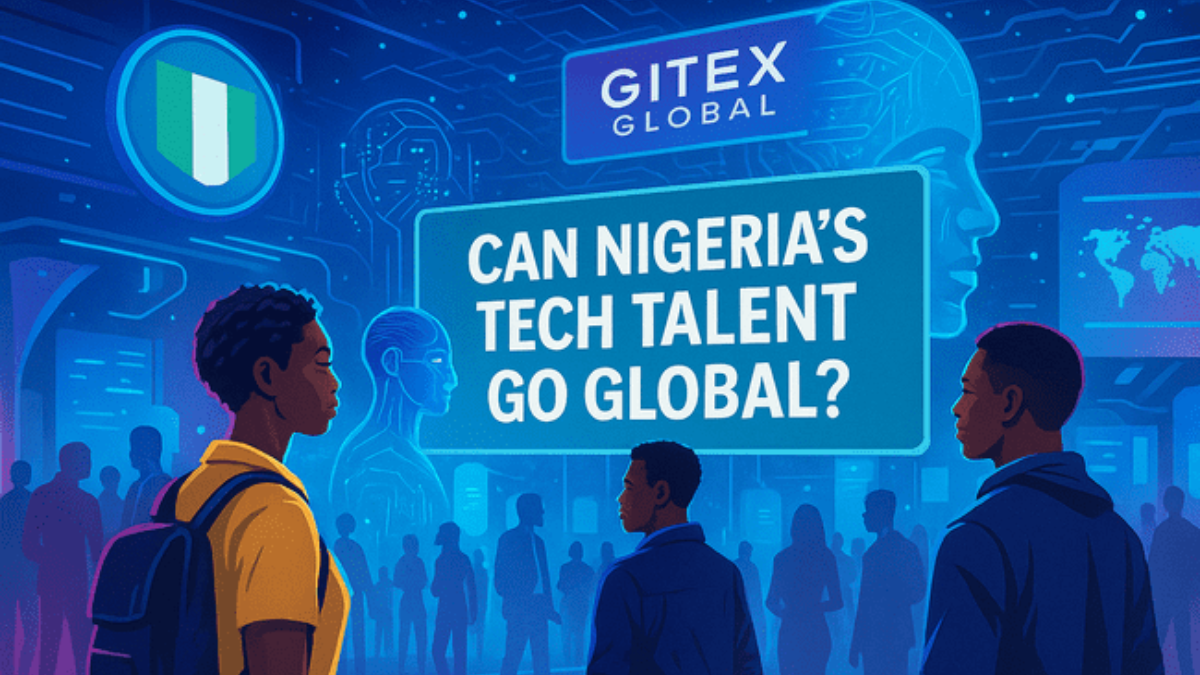
GITEX Global returns, with a focus this time on Africa. One of the countries making waves is Nigeria, whose presence at GITEX 2025 is not merely symbolic but strategic. The burning question on tech corridors and Twitter threads: Can Nigeria’s tech talent step up to the world stage?
This is beyond a tech show. For Nigeria, GITEX represents a chance to recalibrate its role in the global digital economy. With its young population, emerging startup infrastructure, and rising foreign interest, the timing could not be more vital.
What is GITEX, and why is it important?
GITEX (Gulf Information Technology Exhibition) is among the largest technology exhibitions in the world. Based in Dubai, it brings together governments, investors, developers, startups, and corporate giants to push the boundaries of tech innovation. From AI to Web3, smart cities to health tech, GITEX is where ideas are turned into global conversations. Nigeria’s regular showing at the event has been increasing in intensity. But 2025 is different. It is no longer about presence, but about performance.
Nigeria’s Talent and Digital Economy Landscape
Nigeria’s digital economy has been expanding strongly. One of Africa’s biggest tech startup ecosystems is in the country, with centers such as Lagos, Abuja, and Port Harcourt churning out solutions in fintech, agritech, edtech, and others. Government programs such as Digital Nigeria, The National Digital Economy Policy and Strategy (NDEPS), and interventions under NITDA have provided channels for training, funding, and regulation. Yet the lifeblood of this ecosystem is the talented young Nigerians eager to code, create, and compete.
This year at GITEX, Nigeria is not only highlighting companies but announcing to the world: Our talent is ready.
Why GITEX 2025 Is a Make-or-Break Point
GITEX is a gateway. Other nations, such as India and Estonia, have leveraged such platforms to draw investments and highlight innovation. Nigeria needs to do the same now. During GITEX 2025, the Nigerian delegation aims to:
● Secure international partnerships
● Attract foreign direct investment
● Show the world what Nigerian youth are building
Most importantly, this is an opportunity to change perception. Nigeria has struggled with the “419” stereotype for too long. GITEX presents a different script: innovation, resilience, and genius. Apart from that, the world’s digital economy is changing. Talent moves around. Investment goes to where the ecosystems are successful. This is not a time for Nigeria to be visible — it’s a time
for Nigeria to compete.
The Challenges: Infrastructure, Policy, and Talent Drain
Nigeria’s technical talent has never been in question. The problem is in developing an ecosystem that can incubate, retain, and grow talent.
Major challenges are:
● Power and Connectivity: Regular power outages and limited broadband hinder business efficiency.
● Policy Instability: Abrupt bans (such as the Twitter ban in 2021) generate uncertainty.
● Brain Drain: A lot of top talent is migrating to Europe, North America, and the UAE in search of higher salaries and infrastructure.
There’s also the question of funding. Venture capital is coming into Africa, but Nigeria’s portion is at risk as investors look to markets such as Kenya and Egypt. Despite these, the energy at home remains. Startups are still launching. Coders are still coding.
What they need is a break. GITEX could be that break.
Nigerian Startups to Watch at GITEX 2025
A number of Nigerian startups will be pitching, exhibiting, or demoing at GITEX. Although the complete list is still emerging, early names include:
● Treepz – Nigeria’s Uber-for-buses concept now expanding throughout Africa.
● Spleet – A proptech platform revolutionizing rent with flexible payment.
● Vesti – A fintech that aids African immigrants in handling relocation funds.
● Healthtracka – Easy and digital home diagnostics.
● Herconomy – A platform for women enhancing financial inclusion.
● Risevest – Democratizing dollar investments for Nigerians.
These startups are representative of the diversity of Nigeria’s technology space, real problems being solved with global applicability.
Can Nigeria Truly Compete Globally?
Yes, but only supported by structure and strategy. Nigeria’s competitive advantage is in:
● English proficiency
● Youthful energy
● Creativity under pressure
All over the world, Nigerians are excelling. From Iyinoluwa Aboyeji (Andela and Flutterwave co-founder) to Google and Meta tech engineers, the diaspora is evidence of potential. Yet talent is not sufficient. Absent investor confidence, absent enabling infrastructure, the narrative could be another missed opportunity.
Nigeria needs to learn how to package its value, not only in pitch decks but in fundable, scalable systems.
Lessons from Previous GITEX Appearances
Nigeria’s previous appearances at GITEX have been subdued but promising. Delegations came, stands were mounted, panels were attended but headlines were few. Rwanda took center stage in 2023 with its bold presence and unified branding. It was closely
followed by Kenya with its high-impact startup pitches.
Nigeria can learn from this:
● Share an interesting narrative
● Come with facts, not dreams
● Prioritize follow-up after the event
● Utilize the press to extend reach
● Measure outcomes, not just attendance
This year, we require more than attendance. We require impact.
What Success Would Look Like at GITEX 2025
Success is not a good pitch alone. It is gauged by:
● MOUs signed
● Deals signed
● Partnerships established
● Talent found
● National image elevated
Picture a Nigerian startup securing a million-dollar seed round on the GITEX floor. Or a developer being hired by an international tech company. These are not dreams—they are possible realities. If the government agencies and private sector stakeholders work together harmoniously, the benefits can be long-lasting. GITEX can be a launching pad, not merely a show window.
And in a world where perception tends to trump reality, Nigeria needs to conquer both.
Strategic Recommendations
Government-Supported Stands: Offer incentives to high-performing startups to participate. Media Partnerships: Collaborate with foreign media to showcase Nigerian victories.
Investor Roundtables: Organize direct discussions among VCs and local entrepreneurs.
Diaspora Engagement: Leverage GITEX to access Nigeria’s international tech diaspora.
Follow-Up Mechanisms: Establish a GITEX Nigeria Taskforce for post-event outcomes.
Metrics for Success: Monitor deals, media impressions, and partnerships after the event.
Training Before GITEX: Get the founders ready on pitching and storytelling.
These steps can convert an international event into a national breakthrough.
GITEX Is a Mirror
GITEX 2025 is more than just a tech event. For Nigeria, it’s a mirror reflecting how far we’ve come, how ready we are, and how bold we’re willing to be. Nigeria’s tech talent at GITEX 2025 must do more than participate. It must lead. We possess the skills. We have the ideas. Now, we must show the world.