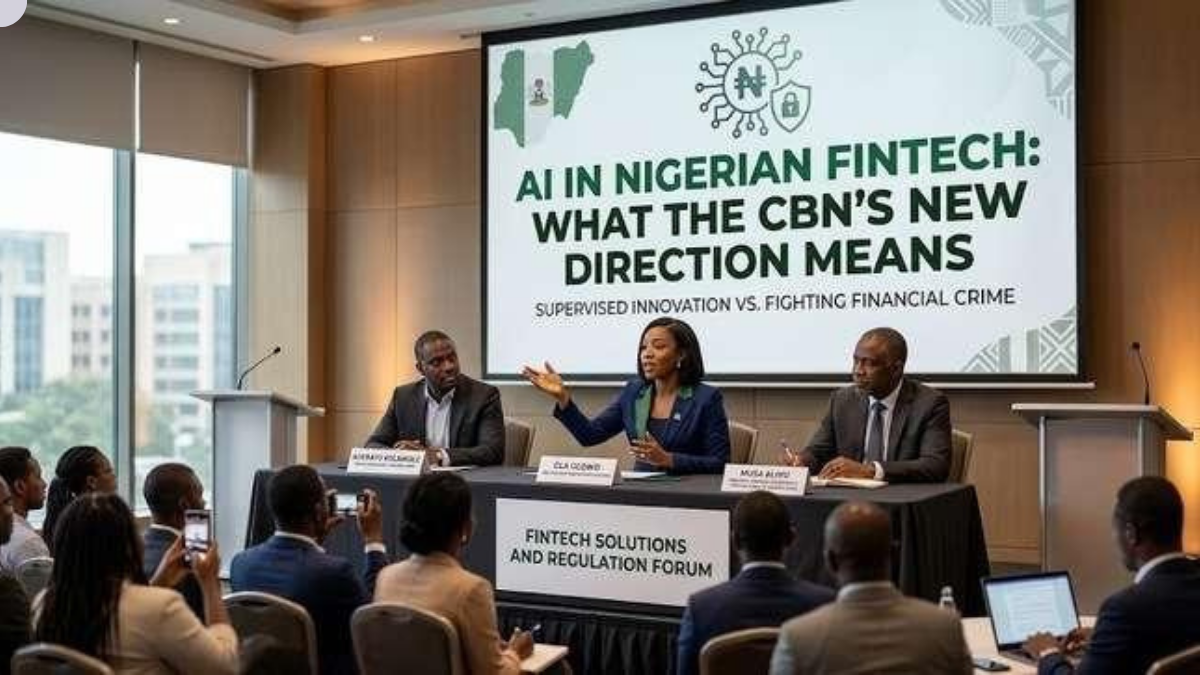
AI in Nigerian fintech works quietly behind almost every transfer you make. When you send money late at night, software checks your habits, your device, and the recipient before it approves the payment. The Central Bank of Nigeria (CBN) has noticed, and it is now shaping how far that technology can go.
The regulator has made three moves this year. It wrote AI into its anti-money laundering rules. It backed a sandbox plan that lets companies test new technology under supervision. It also warned the industry about fairness and transparency. This article explains what each step means for fintech companies and for ordinary users.
Why AI in Nigerian Fintech Is Growing So Fast
Nigerians move money digitally on a huge scale. The CBN’s Fintech Policy Insight Report says close to 11 billion transactions ran through the NIBSS Instant Payment platform in 2024. That figure stood at 5 billion in 2022.
Fraud has grown with that volume. Data from the Financial Institutions Training Centre shows fraud losses jumped 603 percent in the first quarter of 2025. Losses reached ₦3.29 billion across 12,347 reported cases.
Human teams cannot review that much activity by hand. So fintechs have turned to AI. The CBN’s fintech report says nearly 90 percent of Nigerian fintechs now use AI-powered tools. Fraud detection makes up 87.5 percent of those uses.
In other words, AI in Nigerian fintech works mainly as a security guard. It does less customer chat than most people assume.
How the CBN Is Shaping AI in Nigerian Fintech Through AML Rules
The clearest signal came in March 2026. The CBN issued baseline standards for automated anti-money laundering (AML) systems. It was the first time the regulator named AI and machine learning in its AML framework.
The CBN said manual controls are no longer enough for a digital financial system. Institutions must now deploy automated tools that support customer due diligence, flag suspicious activity and report to regulators. Those regulators include the Nigerian Financial Intelligence Unit.
The rules apply to banks, mobile money operators, international money transfer operators and other regulated institutions. They encourage anomaly detection, behavioural pattern recognition and automated risk scoring. They also push companies toward fraud monitoring that works in real time or near real time.
Deadlines matter here. Institutions must submit implementation roadmaps within three months of the circular. Deposit money banks then have 18 months to comply fully. Other financial institutions get up to 24 months. The CBN says it will check compliance through inspections and may sanction firms that fall short.
The rules also set guardrails for AI itself. Companies must validate machine learning models independently at least once a year. They must keep a documented governance framework with human oversight. Their systems must also explain why an alert fired, so investigators can understand the reasoning.
How the Regulatory Sandbox Fits In
The CBN has not published a standalone AI rulebook. Instead, it plans to learn by testing.
In February 2026, the CBN released its Fintech Policy Insight Report. The report calls for expanding the sandbox to cover AI, cross-border payments and embedded finance. It recommends a “test-then-codify” approach. Under that approach, lessons from the sandbox become formal regulations later. The report also proposes a Standing Fintech Engagement Forum that meets quarterly.
The sandbox is already moving. Applications for the second cohort opened on August 12, 2026, and closed on August 31. The cohort covers virtual assets, stablecoins, digital payments and data-enabled financial services. Reports do not name AI as a separate category for this round, so founders should read the scope carefully.
Sandbox entry is not a licence. The CBN stressed that participants cannot operate outside the approved testing limits. They must also meet requirements on consumer protection, cybersecurity, operational resilience and regulatory reporting.
What This Means for Fintech Founders
Founders should take away three lessons.
Automated compliance is now the baseline. If your platform handles payments, plan for AI-assisted monitoring. Smaller startups should budget early, because roadmap deadlines arrive quickly.
Explainability is a requirement. A model that flags customers without clear reasons will cause trouble under the new standards. Build audit trails from day one.
The CBN wants dialogue. The proposed engagement forum gives companies a channel to shape future rules. Firms that join early will understand the direction before the rules land.
What It Means for Everyday Nigerians
Customers will notice the changes in small ways. Fraud alerts may arrive faster. Suspicious transfers may freeze sooner. Some honest users will also see legitimate payments flagged by mistake.
That risk deserves attention. A frozen account can hurt a trader or freelancer who needs cash that day. Fintechs need clear appeal routes and quick human review.
Customers also carry some responsibility. Guidelines issued in December 2025 require customers to report fraudulent transactions within 72 hours. Banks and fintechs then have 16 working days to investigate and process refunds. So act fast when something looks wrong.
The Risks Regulators Still Need to Address
The direction is promising, but gaps remain. No dedicated AI framework exists yet. Companies must piece together guidance from several documents.
The CBN itself has named the main concerns. At the Digital Pay Expo in Lagos in June 2026, CBN officials stressed transparency and explainability. They also warned that AI depends on data quality. If the data is incomplete or uneven, outcomes may unfairly disadvantage some groups of people.
The CBN’s Payments System Vision 2028 treats AI as a strategic technology. It plans AI tools for fraud prevention, cyber threat response, and operational efficiency. The challenge now is delivery. Good plans only help customers when regulators follow through.
Frequently Asked Questions
Does the CBN allow AI in Nigerian fintech?
Yes. The CBN now encourages AI for fraud and AML monitoring. It expects human oversight, explainability, and regular model validation.
Is there a separate CBN law for AI?
Not yet. As of late October 2026, the rules sit across the AML standards, the sandbox programme and wider payment policy.
When must companies comply with the AML standards?
Institutions submit roadmaps within three months of the circular. Deposit money banks have 18 months. Other institutions have up to 24 months.
Conclusion
AI in Nigerian fintech is no longer a side project. The CBN has made automated monitoring part of the rulebook. It has opened a sandbox for new technology. It has also signalled that formal rules will follow real-world testing.
For founders, the plan is simple. Build compliance into your product, keep humans in the loop, and join the regulator’s conversations early. For customers, the upside is stronger fraud protection, provided companies treat honest users fairly. If the CBN turns sandbox lessons into clear rules, Nigeria could lead Africa in responsible AI for finance.