Nigeria’s shared heritage is one of myth, but survival has always been an uphill battle. From plundered Benin Bronzes fragmented around European museums to crumbling relics sealed in under-sponsored displays, history has all too often slipped from our fingers. Picture, then, a place where you can wander through ancient kingdoms, tread the revered shrines, and cradle a 3D-printed Nok terracotta in the palm of your hand, from your bedroom. That is the promise of Nigeria’s first digital museum. It is not just innovation, but a lifeline of culture, one that preserves the past even as it brings it out to the world.
What is Nigeria’s First Digital Museum?
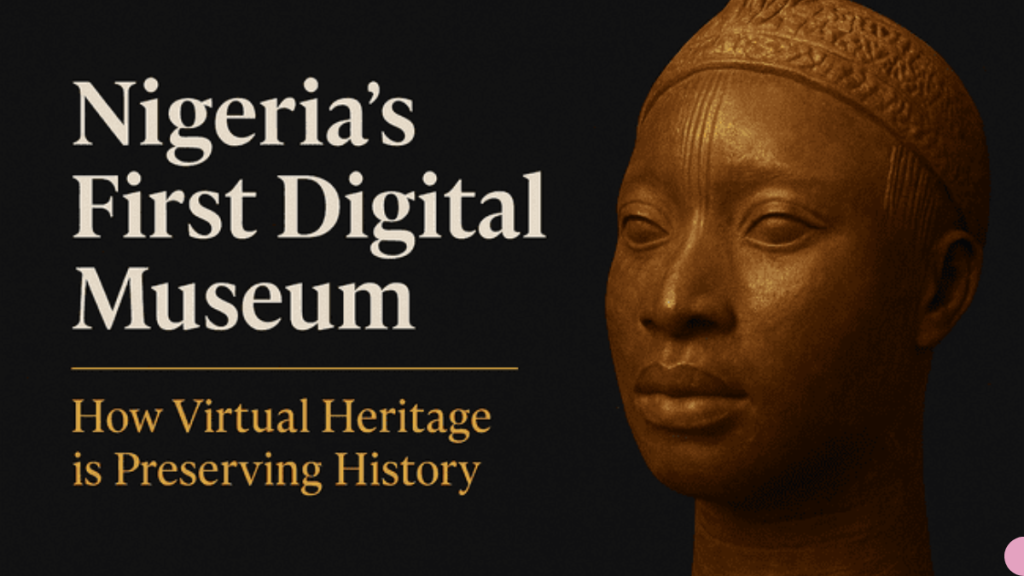
Nigeria’s Web-based museum is a bold experiment that brings together culture and the latest available technology. Rather than store pieces in dry museum rooms, the experiment creates a Web-based location from which one can, anywhere in the world, see Nigeria’s patrimony. Museum exhibits consist of virtual portfolios of artwork, antiquities, and historical documents, some too frail or too valuable ever to be shown in material form.
With 3D immersive viewing and high-definition visualization, one can zoom in on parts of exhibits that even conventional museums keep closed. And, particularly where Nigerians are outside the country, geography and culture are abolished. To schoolchildren, historical lessons are converted from boring books into colorful, interactive sessions.
Why Virtual Heritage is significant in Nigeria
The Nigerian patrimony has been battered remorselessly by colonization, plunder, and neglect. More than 90% of the Bronzes of Benin are still in Europe, and much of our cultural patrimony remains outside of Nigeria in foreign archives. Even within Nigeria, there are conservational emergencies: museums’ faulty refrigeration, lack of resources, and unsuitable conditions of storage endanger what remains of our patrimony.
Virtual heritage presents a ground-breaking remedy. Digitization does not prevent theft but ensures Nigerians can retrieve possession in symbolic but effective terms. A student in Maiduguri can, for instance, plunge himself into a history of Benin royalty virtually. An artist in Enugu can draw inspiration from sculptures in digitized terms without a trip to London or Berlin.
Most importantly, it makes culture democratic. History is no longer the domain of urban capitals such as Lagos or Benin but of all people, courtesy of the availability of the internet.
The Technology Behind the Museum
The virtual museum uses 3D scanning, high-definition camera imagery, and virtual reality (VR) software to record and preserve artifacts. Each of the sculptures, each of the masks, each of the manuscripts is completely scanned, such that its design, texture, and even its flaws are preserved virtually.
For Nigeria’s tech-savvy population, VR tours provide a sense of presence, not only are you learning about the Benin Kingdom, but you’re virtually within its royal courts. For mobile phone users, bite-sized 360-degree images make the experience possible without the need for high-end phones.
The global integration further means the Nigerian digital museum can stand its ground on the international scene alongside initiatives such as Google Arts & Culture. Such international exposure not only brings Nigerian creativity into prominence but also puts the country at the center of digital preservation within the African continent.
How Nigerians Can Experience It
Accessing Nigeria’s first digital museum is simple:
- Website Portal: Users can log on via any browser and explore collections.
- Mobile App: Optimized for phones, it offers interactive features such as artifact details and guided audio tours.
- VR Experience: For those with VR headsets, the museum provides immersive, room-scale experiences.
The audience is wide-ranging:
- Students & Researchers benefit from accurate, detailed visuals for academic work.
- Artists & Creators tap into centuries of inspiration.
- Diaspora Nigerians reconnect with roots they may never have physically seen.
- Tourists get a digital preview before visiting Nigeria’s physical heritage sites.
This accessibility ensures that cultural learning isn’t just for elites; it’s open to anyone curious enough to click “enter.” In many ways, the digital museum is the equalizer Nigerian heritage has been waiting for.
The Global Impact
The Nigerian virtual museum is not only about saving the past, but redefining stories. Our culture has had its meaning pre-decided for centuries by external curators. Now, we control what stories we tell. This has three major global effects:
Cultural Diplomacy – By placing our past on the World Wide Web, Nigeria ensures its cultural voice in global discourse.
Growth in Tourism – Virtual access generally encourages physical visits. Foreign visitors are able to look at Nigerian culture online and then come and visit the sites themselves.
Identity Reconnection – For the Nigerian diaspora in the US, UK, and beyond, the museum is an anchor, a sense of belonging to lost migration traditions.
This is not mere preservation, but soft power, educational, and tourism policy rolled into one.
Challenges Ahead
Of course, digital innovation comes with hurdles. Internet penetration in rural Nigeria remains low, and not everyone has the necessary bandwidth for heavy 3D models. There’s also the issue of funding; digitizing thousands of artifacts is not cheap, and maintaining servers for global access requires long-term investment.
Another challenge is awareness. Many Nigerians don’t yet know this resource exists, or they assume culture is something only tied to physical objects. Changing that perception requires campaigns, school integration, and partnerships with local communities.
Yet these challenges don’t outweigh the promise. Partnerships with tech companies, government backing, and private sponsorship can keep the vision alive. If anything, the museum’s existence proves that Nigeria can fuse tradition with innovation, preserving memory while embracing progress.
Conclusion
With our first virtual museum of Nigeria, we are not providing a physical luxury; we are employing a survival strategy of our legacy. As the world witnesses our legacy being lost or locked outside our nation, digitization ensures that our past endures among Nigerians. It gives you, a student in Ibadan, a traveler in London, and a Nigerian-American looking back, access that would have been impossible a decade ago. Heritage is our past, yes, but our passport into our future. And by moving into the information age, Nigeria is demonstrating to the world that we can keep our past and be a pioneer into our future.