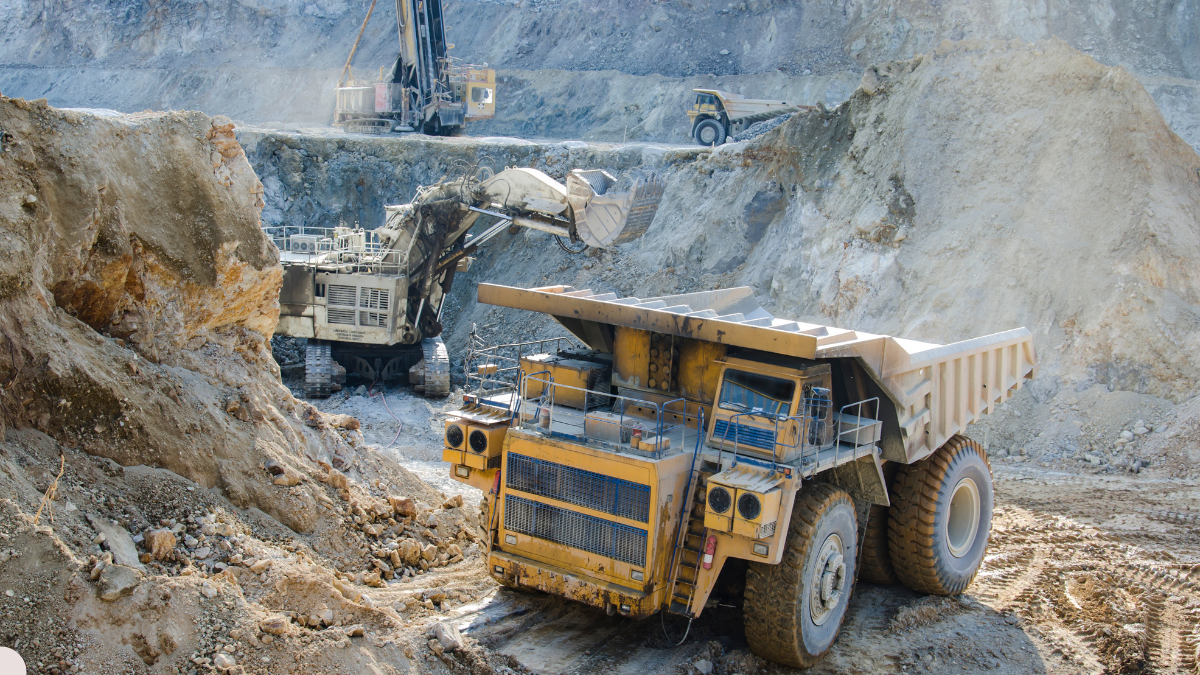
For decades, the story of Nigeria’s economy was essentially a story about crude oil. But if you’ve been paying any attention to the headlines in 2026, you’ll notice the narrative is shifting. As the world moves toward green energy, Nigeria’s solid wealth of lithium, gold, and rare earth metals has become the new bride everyone wants to marry. However, this global interest has brought a very dark shadow with it. Illegal mining in Nigeria has exploded from simple villagers digging in their backyards into a high-stakes, multi-billion-naira black market run by sophisticated cartels.
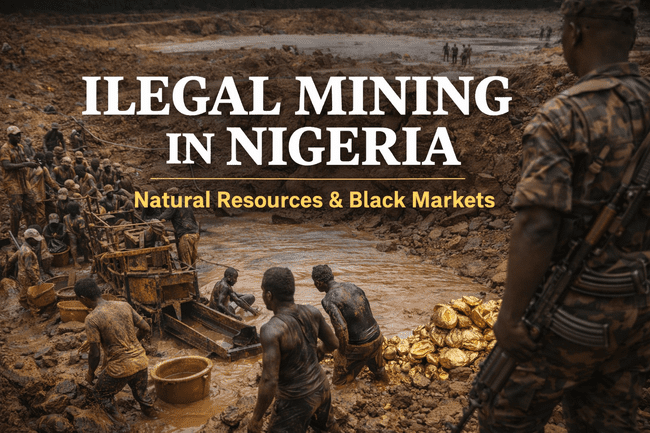
Walking through the mining hotspots in states like Niger, Nasarawa, or Plateau today feels less like visiting an industrial site and more like stepping into a lawless frontier. While the government has ramped up enforcement this year, deploying Mining Marshals and using satellite tech to track ground disturbances, the underground trade is stubborn. It’s a complex web where foreign money, local desperation, and porous borders meet to bleed the country dry.
The 2026 Landscape
The scale of the crisis is hard to wrap your head around unless you see the data. By mid-2026, reports from the Ministry of Solid Minerals suggest that unauthorized operations still control nearly 70% of the sector’s output. This isn’t just about gold anymore. This year, the white gold lithium has become the primary target.
With the global demand for electric vehicle batteries hitting a fever pitch, illegal mining in Nigeria has moved aggressively into the lithium belts of Kogi and Nasarawa. These aren’t just small pits; these are massive, unregulated operations that bypass every environmental law in the book. The minerals are being pulled out of the ground so fast that the local communities don’t even realize the wealth they are sitting on until the land is already ruined.
How the Shadow Market Actually Works
The black market for Nigerian minerals is not some disorganized group of people. It is a highly efficient machine. If you’ve ever wondered how stones dug up in a remote village in Zamfara end up in a high-tech factory in Asia or Europe, the process is a masterclass in smuggling.
It usually starts with the Consolidators. These are local middlemen, often backed by foreign cash, who go into villages with bagfuls of Naira. They pay artisanal miners a pittance, often less than 5% of the actual global value, to do the dangerous work. Because they deal in cash, they stay completely invisible to the Nigeria Revenue Service (NRS) digital tracking systems.
Once the minerals are out, the Black Routes take over. In 2026, we’ve seen a trend where minerals are hidden in trucks carrying agricultural products like onions or yams. They move through the “porous land borders” in the North or small, hidden jetties along the Niger Delta coast. Once the minerals cross into a neighboring country, they get washed. New documents are forged to make it look like the gold or lithium originated from a legitimate source outside Nigeria. By the time it hits the international market, the link to illegal mining in Nigeria has been erased.
The Human and Environmental Cost
If you visit a site where illegal mining in Nigeria has taken place, the first thing that hits you isn’t the wealth; it’s the smell of destruction. Unlike licensed companies that have to follow Reclamation Plans, illegal miners just dig and move on. They leave behind what locals call death traps, massive open pits that fill with stagnant water, swallow livestock, and become breeding grounds for disease.
In states like Oyo and Plateau, 2026 health surveys are showing a terrifying spike in lead poisoning and heavy metal contamination in the water. We aren’t just losing money; we are losing the land itself. When the tax man is ignored, the environment is the first thing to pay the price.
The “Gold-for-Arms” Crisis
We also have to talk about the elephant in the room: security. There is a direct, documented link between these illicit pits and the insecurity we see across the North. In 2026, intelligence reports have confirmed that several mining sites are actually funding hubs for organized crime and banditry.
It’s a simple, brutal trade: Gold for Arms. The minerals are bartered for weapons, which are then used to terrorize the same communities the miners are living in. This is why the fight against illegal mining in Nigeria is no longer just an economic issue; it is a full-blown national security emergency.
The 2026 Crackdown: Mining Marshals and Satellites
The Federal Government hasn’t just been sitting on its hands. This year, the Ministry of Solid Minerals launched a hard-power response. For the first time, we have the Mining Marshals, a specialized security outfit trained to patrol mining hotspots and make arrests on the spot.
They are backed by a new satellite surveillance system. In the past, miners could hide in the deep bush for years. Now, the government gets an alert the moment there is a significant ground disturbance in a restricted zone. Since January 2026, we’ve seen more arrests of foreign nationals and local collaborators than in the previous three years combined.
Another big move is the Minerals Pre-Shipment Agency. Under the new 2026 rules, no mineral can leave a Nigerian port without a digital Certificate of Origin tied to a valid NIN or Corporate Tax ID. If you can’t prove where you dug it up, you can’t ship it out.
The Foreign Influence Problem
We cannot talk about illegal mining in Nigeria without calling out the foreign actors involved. Just last month, security forces in Niger State arrested several individuals who were providing the heavy machinery and technical “know-how” for an unauthorized lithium site.
These actors often enter the country on business visas and hide under the cover of legitimate companies. They exploit the fact that they can bypass the new 2026 royalty rates, which have significantly increased the cost of doing business legally. By operating in the shadows, they rob the Nigerian taxpayer of billions of dollars that should be going into schools, hospitals, and infrastructure.
The Path Forward
So, how do we fix it? You can’t just arrest your way out of this problem. The real solution lies in Formalization.
In 2026, the government is pushing a cooperative model. The idea is to take the artisanal miners out of the black market and give them a legal path. If they form a cooperative, they get:
- Legal Title: They can mine without fear of arrest.
- Better Equipment: Access to the 2026 Mineral Development Fund for modern machinery.
- Fair Pricing: They can sell directly to the government or licensed buyers at market rates, rather than being cheated by middlemen.
When we bring these miners into the “light,” we stop the economic leakage and ensure that the wealth stays within the Nigerian economy.
Conclusion
At the end of the day, the struggle against illegal mining in Nigeria is a struggle for the future of our economy. We are standing on trillions of dollars’ worth of resources. If we allow the black market to keep winning, we are essentially allowing the future of the next generation to be smuggled out in the back of a truck.
The 2026 reforms are a massive step forward, but the tax man and the mining marshal can’t do it alone. It requires every Nigerian to see our minerals as our collective heritage. Whether it’s the lithium in our batteries or the gold in our jewelry, we have to ensure it was pulled from the ground legally, safely, and for the benefit of all Nigerians.