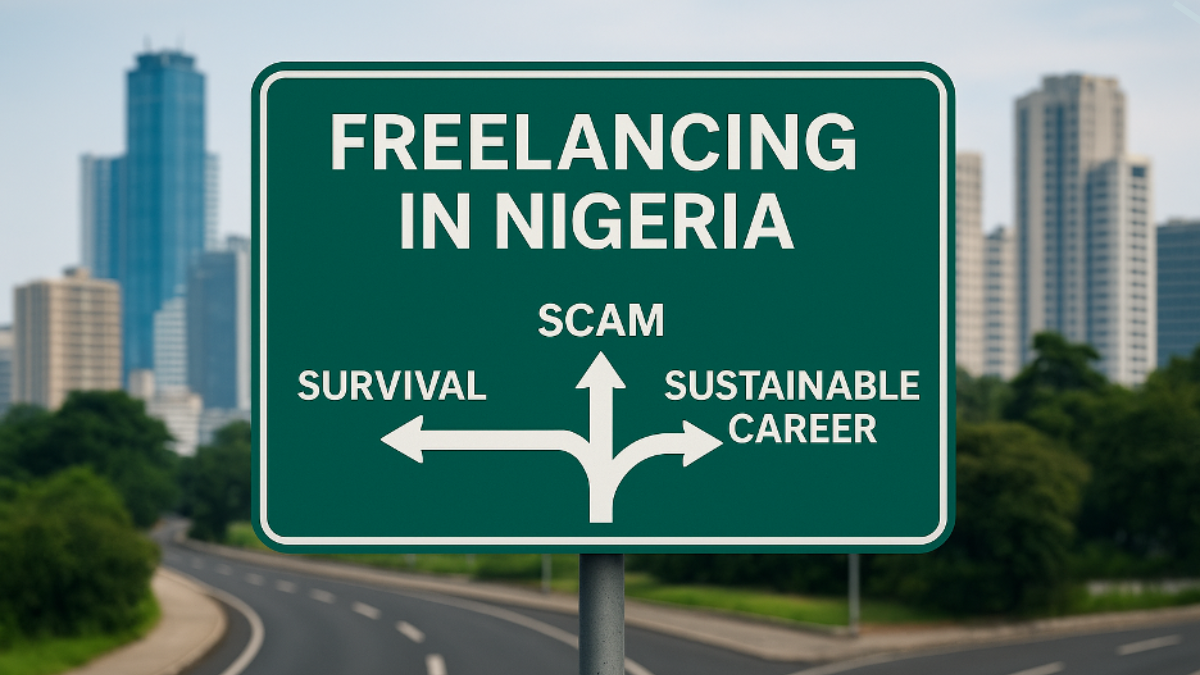
Over the last few years, freelancing in Nigeria has evolved from being a side note in career conversations to becoming a full-blown reality for many young professionals. Digital tools, community-led platforms, and the pressure of navigating a tough job market have all pushed people toward freelance work. But as more Nigerians turn to this space, one question continues to rise: Is freelancing truly sustainable, or just another hustle we’re dressing up as a career?
Why Freelancing Took Root So Quickly
It is tempting to say freelancing “just became popular,” but that would miss the larger story. This shift happened because traditional systems failed many young Nigerians. With university strikes stretching for months and unemployment becoming normalized, people had no choice but to explore alternative routes.
Then the pandemic came. Suddenly, global companies were hiring remote workers, and platforms like Upwork, Fiverr, and LinkedIn became more than websites—they were lifelines.
But not everyone went the formal route. Many Nigerians started small right here at home: through connections on Twitter (now X), referrals through WhatsApp groups, and interactions on forums and DMs. Work happened anywhere, anytime, and often without structure. The motive? Survival first. Everything else came later.
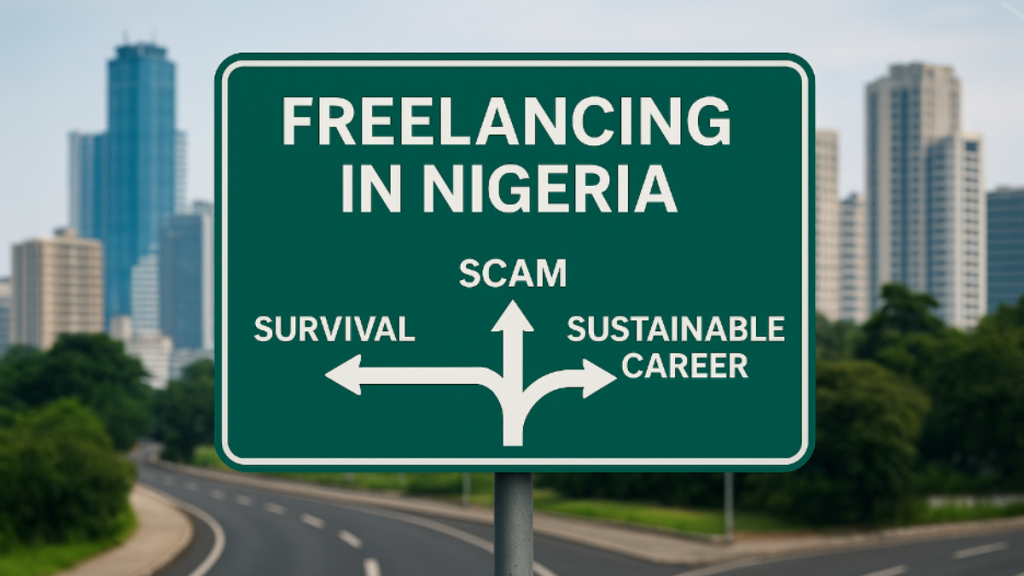
If You’re Freelancing, You Probably Started With Pressure
For most young Nigerians in this space, freelancing wasn’t a strategic decision made with spreadsheets and life goals in mind. It was more like this:
“I had to contribute to the house.”
“My NYSC ended, and nothing came up.”
“Someone offered me ₦5,000 for a voice-over, and I just said yes.”
That is how it begins. You take a gig. It leads to another. Weeks go by, and suddenly, you are a freelancer, even if you never used the word.
But what many soon realize is that freelancing is unpredictable. It becomes a constant calculation: if I lose power for three hours, can I still deliver this project? If my client pays late, how do I pay for the data subscription?
There is money to be made. But there’s also insecurity, inconsistency, and a lingering sense that it could all disappear if one client ghosts you.
The Scam Culture Around the Dream
Anyone who has spent time in the freelance bubble knows this side too well. There is a growing market of people selling hope online courses that teach vague “skills,” paid communities that gatekeep basic information, and job boards that require a fee for the chance to apply.
Some clients, even within Nigeria, prey on beginner freelancers, offering exposure instead of fair pay or abandoning projects altogether after receiving deliverables.
And on the flip side, some freelancers resort to shortcuts. AI-generated writing, outsourced deliverables, plagiarized graphics, and these issues are a growing concern. They erode trust, both locally and abroad.
The freelance space lacks a system. And when there are no boundaries, exploitation becomes easy.
People Are Building A Real Career Out of It
For some, freelancing in Nigeria is evolving beyond the hustle—it’s becoming a structured and sustainable career path.
Take, for instance, a young Nigerian who began with small writing gigs, often underpaid but filled with potential. Over time, he expanded his skill set, venturing into graphic design, brand strategy, and editorial contributions to platforms like Applied Worldwide. By blending storytelling, creativity, and analysis, he carved out a unique professional identity rooted in value and impact.
He’s not alone. Across the country, there’s a growing community of freelancers—writers, developers, designers, consultants—who are building careers on their terms. Some are acquiring property, managing clients across time zones, outsourcing work, and even mentoring newer creatives.
Though still a minority, these freelancers are proof that it’s possible. With structure, clarity, and integrity, freelancing can be more than just gig work—it can be a legitimate, long-term career.
What Still Holds Freelancers Back
While freelance work offers flexibility, it also brings its own set of challenges, unique to the Nigerian experience.
Power supply remains unstable. Many freelancers schedule work around when they expect electricity. Data costs eat into profits. Time zone differences with international clients make scheduling difficult.
Perhaps most frustrating is how freelance work isn’t taken seriously by many in traditional society. Parents and elders regularly ask, “When are you going to find a proper job?” And because there’s no official tax system, legal recognition, or health benefits for freelancers, it becomes difficult to prove that this work is just as valid as office jobs.
Even when one breaks through, it’s common to carry the weight of disbelief from family, misunderstanding from peers, and pressure to justify a career path few truly understand.
Is Freelancing Worth It in Nigeria?
Yes, it can be, but only if treated with intention. It has the potential to become a reliable pathway, especially for younger people who are willing to skill up, understand the economy of trust and results, and gradually build a personal brand around what they offer.
Freelancers need more than technical skills. They need contracts, boundaries, client management skills, financial literacy, and support systems. Most importantly, they need to stop thinking in terms of “gigs” and start thinking in terms of “clients.” That mental shift changes the game entirely.
On the broader scale, this future will only grow if the people in power take digital labor seriously. They must improve access to stable power, recognize remote work in labor laws, and allow full access to global payment systems.
Conclusion
Freelancing in Nigeria exists in tension.
It begins with survival. It can become a form of freedom. But without truth, structure, and honest work, it risks collapsing into something predatory, both for those offering services and those seeking them.
Still, among the noise and manipulation, there’s a new generation rising: skillful, self-taught, empathetic, and enterprising. Many of us are not just working—we are building something. A future where location does not define opportunity. A future powered by persistence, not just platforms.
If nothing else, freelancing proves that even when systems fail, Nigerians still find ways to create.