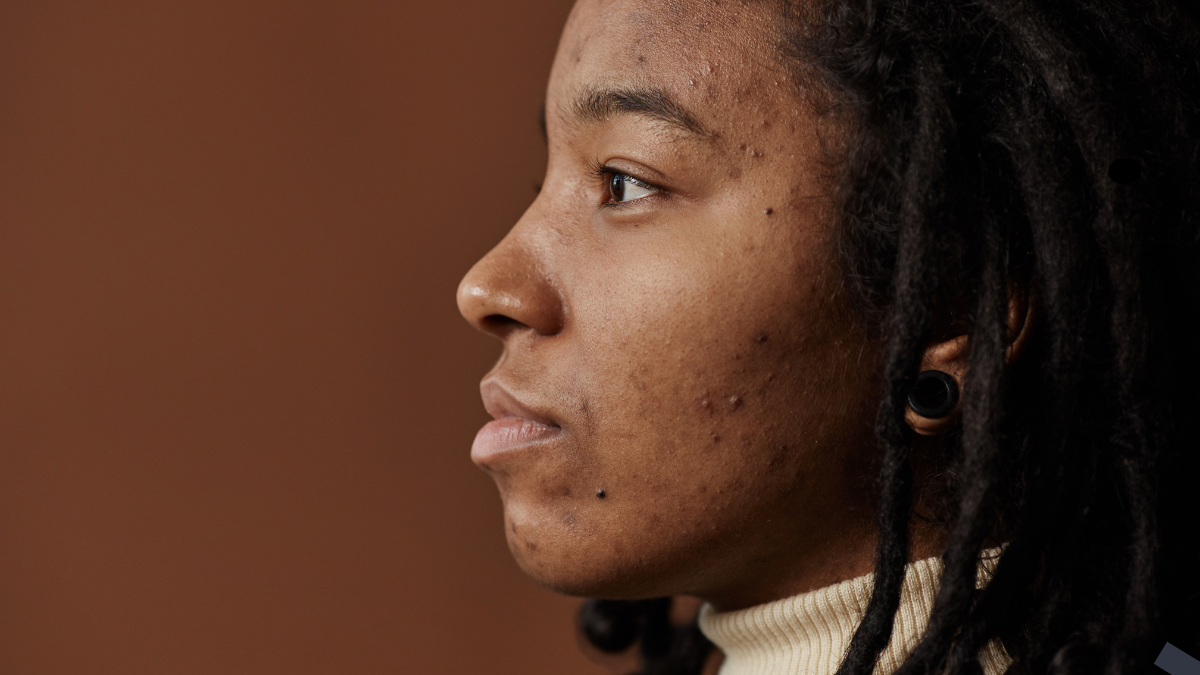
Maryam’s 15th birthday brought an unexpected guest: acne. At first, science class had prepared her for this moment – a rite of passage into adulthood, marked by unwelcome blemishes. But eight years later, the excitement has morphed into a constant battle with sadness, depression, low self-esteem, and anger. The pimples that once symbolized maturity now cast a shadow on her confidence.
Maryam’s story isn’t unique. Countless Nigerians grapple with the emotional and financial burden of acne, often exacerbated by a constant barrage of unsolicited advice. From concerned family members to strangers on the street, everyone seems to have a “miracle cure” – often rooted in the misconception of “organic” products that promise solutions but worsen the problem.
In this article, we delve deeper into this issue. We’ll hear from two Nigerians about their personal journeys with acne. Exploring the emotional toll, the physical impact on their daily lives, and the unsurprising financial strain it can cause. Through their stories, we aim to shed light on the realities of acne in Nigeria, moving beyond the surface to understand the true impact it has on individuals and society.
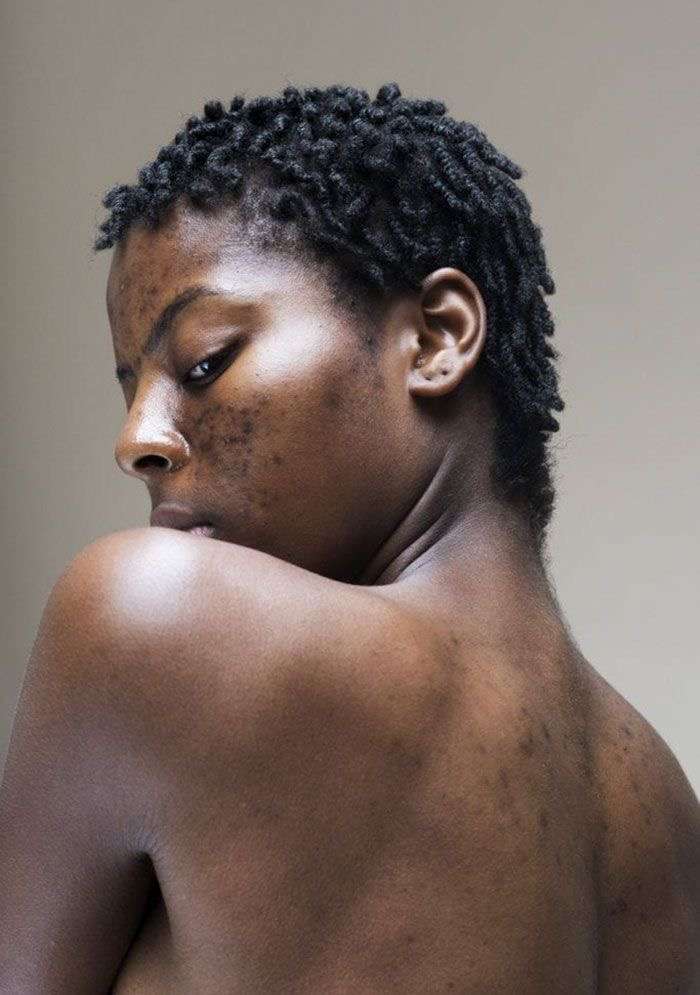
Folake, Student, 22
Folake, a vibrant 16-year-old navigating senior secondary school, paid little attention to these new bodily developments as she saw it as a typical “puberty thing.” Unaware of the potential severity, she didn’t prioritize treatment. She was oblivious to the severity until she got into the University and she began to become self-aware of her physical looks. She thought she found the solution to her skin issues when she came across an ‘Organics Skincare Page’ which had a large number of amazing reviews, encouraging her to get the products. Hopeful, she invested over 50,000 Naira in their product set. She says, ‘‘The set was worth more than 50k and I was excited to use it.”
However, disappointment followed swiftly as her acne worsened, leaving her face “messy” in her own words. “My hopes were dashed as my acne worsened and my face became really messy.”
Undeterred, she tried another brand with equally disappointing results. “I tried another brand that did not improve my skin one bit and I just left it at that.’’ Discouraged, Folake simply stopped seeking treatment.
After the episodes of her failed attempt at treatment, she became overly conscious and her hate for cameras began. This despise was further fueled by the unfair comments and unsolicited advice strangers dished to her.
She recounted, ‘‘I hated looking at the mirror and taking pictures because my face used to disgust me. People’s opinions made it worse. I remembered calling my parents and crying to them after a stranger looked at me and asked if I had tried using Colgate and honey for my acne.”
Two years later, the undergraduate began her search for solutions to her acne. Like every other person desperate to solve a problem, she listened to everyone and used everything she came across on social media and recommendations from friends and families. She realised after spending a significant amount of money that the solution to her acne did not lie in tens of skincare products. This was evidenced by the severe breakouts, hyperpigmentation, and skin burns on her face. However, from hundreds of skincare advice, she begrudgingly decided to try one out for the last time. This decision changed Folake’s skin and herself for the better. She took the advice to seek professional help.
She got in contact with an esthetician recommended to her. After a few meetings online, some new products, and some follow-ups, 7 months later, Folake began to see a better version of herself.
“My face has gotten so much better since I decided to see an esthetician and use the recommended products. My skin sensitivity has reduced a lot and my acne is almost all gone.”
Her skincare journey has not been the easiest but the significant changes are what keeps her going. The 22-year-old narrates, “My acne treatment journey has taught me a lot of things, particularly patience and consistency. There are some medications and products I use at particular times that I would have to set my alarm for. While I thought it would be draining, the results encouraged me.”
The student in her honesty noted the financial implications. But a result well gotten is money well spent! With financial help from her siblings, parents, and a part-time job, she has hardly felt the cost. “I spent almost 80k for products and services in total, and I would do it all over again. It has been well worth it.”
Nneka, 30, Data Analyst
While others might have first experienced acne in their late teens, Nneka got hers at the young age of 11. Like most people, she was consoled with the fact that it was only a puberty thing and it would clear up as soon as it came. Unfortunately, she was in for an unpleasant surprise. She dealt with her acne through her puberty into her adult years.
Like most Nigerians, some of her first resorts were Organic products and she took it a step further by attempting to make some soaps herself. She says, “I tried out a whole lot of organic products and at one point, I started producing my black soaps myself. They looked like they were working but anytime I stopped using them, my skin was back to square one. Years later, I realized I was not treating my acne but damaging my skin barrier.”
Nneka has never been one of low self-esteem but her skin concern affected her relationships and communication with people. “I couldn’t do makeup when I went out with friends because there was so much on my face. The unnecessary comments did not help matters. People asked me silly questions like if I washed my face. It was very hard when people assumed there was something I was not doing while I felt I was doing everything I thought was right.”
Years down the line, Nneka decided to stop self-medicating and also avoided using popular skincare products advertised on social media. She decided to reach out to a skincare consultant but she was left unimpressed. “I reached out to a professional who is quite well known on social media but the products she recommended did not work and that made me give up. I decided to reach out to my current esthetician and it has been one of the best decisions I’ve made.”
She continued, “I still have acne scars which are a result of years of dealing with acne but my face is much better and clearer now. It has been great and worthwhile with patience and consistency. I have not undergone any clinical procedure and the changes are highly significant. I have also learned about skincare products and the ingredients I need.”
Acne. What is it?
Acne is a chronic disorder of the hair follicles and sebaceous glands (commonly called oil glands) located in the middle layer of the skin. In acne, the sebaceous glands are clogged, which leads to pimples and cysts. Acne is commonly found on the face, back, chest, shoulder, and neck, in the form of whiteheads, or pus-filled cysts.
While a range of factors like drugs, cosmetics, and environmental pollution cause acne, hormones are one of its major triggers and hormonal acne is suffered by over 70% of African women. Acne is a major skin condition and its severity differs for people. While some are treated with over-the-counter products, others may have to be treated with topical acne treatment, oral treatment, or clinical procedures like chemical peels. These treatments may be done over a long period of time.
Acne: Its Cure
While there are various methods for treating acne, there is no one-size-fits-all treatment. This is because there are various types of acne with different types of causes. Additionally, our skin is different. While some are very sensitive and would require a lower percentage of active acids and more gentle products, others may require oral treatments and stronger acids.
This is why it is very important to seek the help of an esthetician. An esthetician is a licensed skin care professional who specialises in the cosmetic treatment of the skin. They are trained to provide a variety of services aimed at improving and maintaining the health and appearance of the skin.
Importantly, professional help, consistency, and patience breeds good results. It is necessary to listen to your skin while treating your acne, take care of it and give it time to heal.
Kindness, Kindness, Kindness
People spend a significant amount of money, time, and effort in treating their acne. Except if you are a professional who is willing to help the person, or out of your generosity, you are willing to financially help someone with acne, it would be a kinder world for everyone if you can withhold your “advice” or “comments.” It is unkind and unnecessary for us to make harsh comments towards people dealing with acne, whether online or offline.
Nneka shared some last words which we find encouraging, “A healthy skin does not necessarily mean your skin is free from spots or acne. You can have these and still have healthy skin. Do not be swayed by the filtered pictures on the internet. Contact a good professional and be consistent with your routine.”