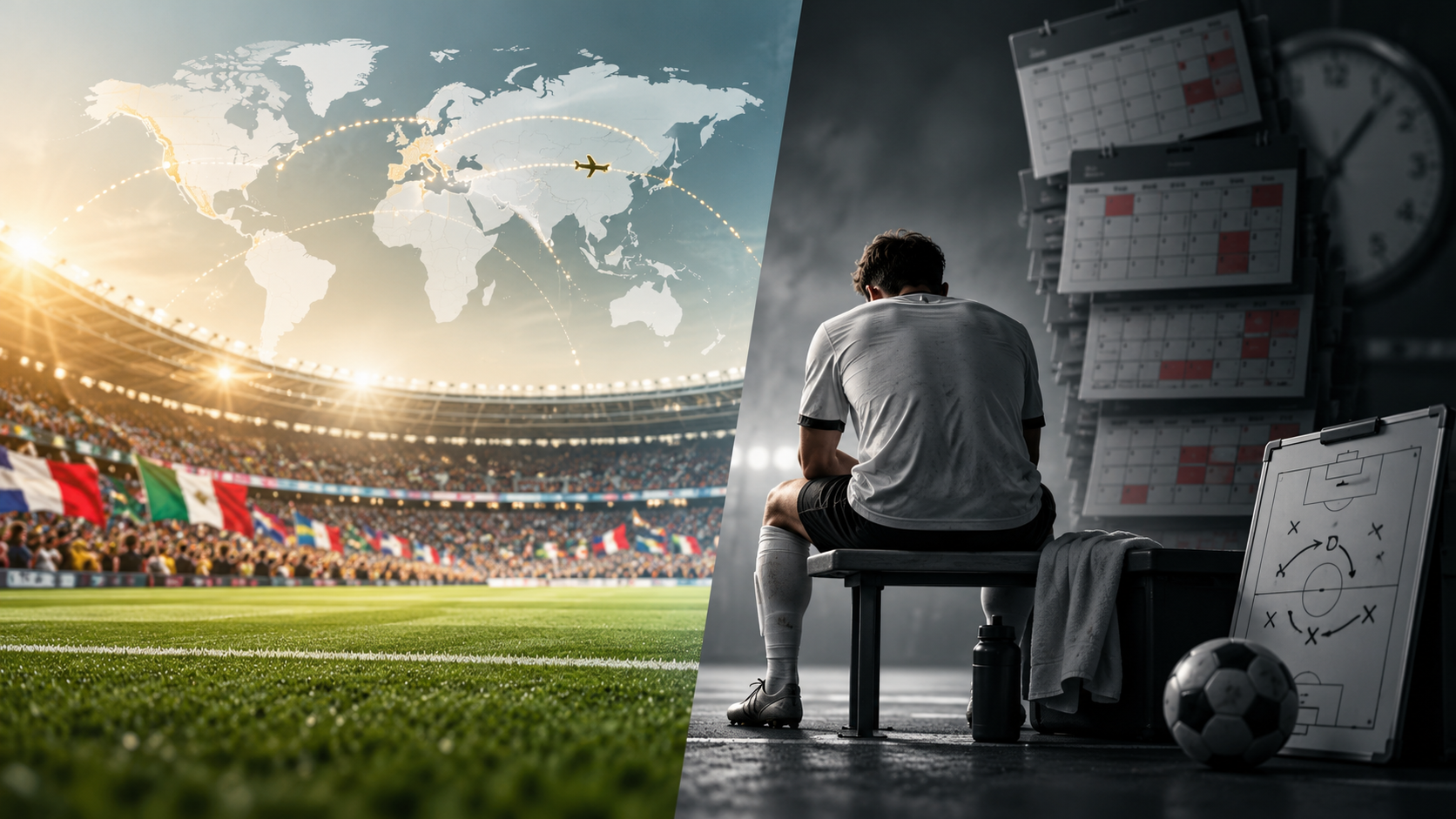
For many football fans around the world, international breaks have become a period that doesn’t excite them. To these football lovers, resuming the international break in the middle of the regular club football season is evidence of bad football calendar planning.
As a result of this, many have called for the cancellation of international breaks altogether. Others, however, are of the opinion that it can be introduced mid-season but should be well planned in a way that it does not affect the intensity of teams.
In this article, we will look at both sides of the argument. First, you’ll be reading factors that have made many football fans suggest the cancelation of international breaks. Then, we will consider reasons why international breaks are a necessary part of mid-season football.
Let’s begin by examining why many football fans call for the cancellation of international breaks.
Why Football Fans Are Getting Tired of International Breaks
Here are three reasons why many club football fans suggest that international breaks be abolished:
1. Club Teams Lose Their Momentum
One of the main reasons why football fans get frustrated when international breaks happen is that there is a noticeable decrease in the momentum of teams after they return from the break. This especially happens when teams that are in crucial stages in their domestic league race are battling for UEFA Champions League spots or to survive relegation.
For instance, since their return from the international break on October 2, 2026, Juventus has been a shadow of itself. The club has only won one game out of the past five games that they have played since their return.
In fact, the failure to win any game has been followed by criticisms by fans of Juventus on the resumption of the International break fixtures, especially at a time when the team was experiencing a good run of form.
2. The Fear of Losing Key Players to Injury
Another worry about the international break for fans is the risk of losing players to injury. It is due to the risk of losing players to injury that many club sides refuse to release their players to the national teams.
This is so serious to the point that it has been reported that some club sides would go as far as sponsoring stories in the media that suggest that the called-up player is injured.
In the recent international break that spanned from September 21 — October 2026, some players were already reported to be injured while on national team duties with their country’s national team.
Notable among players who got injured during the recent international break is Raphinha of Brazil and FC Barcelona. Other key players who got injured were Kai Havertz, Alexander Isak, Cody Gakpo, and Eric Garcia.
These players play a key role in their respective club teams, and as such, injuries to these players would already mean that they would be dropping in the performances of their club in the upcoming games.
It is because of these fears that many club sides, including fans of these club sides, are not happy with international break fixtures.

3. Some International Matches Struggle to Excite Fans
The average football fan is more attached to the club team competitions than their country’s games. The reason is that club sides are often exciting and more money is spent on advertising to draw more football fans.
In fact, some have argued that only international World Cup games bring the same excitement as club competitions. It is because of this reason that many football viewers struggle to follow football activities when the international break resumes.
Also, many football viewers have criticized several international football competitions and have tagged them as “needless”. An example is the well-known UEFA Nations League competition.
Many club sides have said that they do not enjoy sending their players to play in that competition. They have claimed that the competition has turned into a revenue-generating scheme by UEFA and doesn’t have a proper structure for competition.
At this point, let’s consider reasons why others have argued that the international break should remain in football.
The Advantage Of International Breaks
Below are the merits of international breaks that have been mentioned by football lovers:
1. Players Need the Chance to Represent Their Countries
Football is one of the ways and remains one of the ways that a person can show patriotism to their country. Yes, to many footballers, wearing the shirt of their national team isn’t the same as winning trophies with their club side.
The truth is that a player may win the English Premier League trophy or even the UEFA Champions League, but the joy of winning the FIFA World Cup trophy with their national team is a dream for them.
It is via the international break window that provides an opportunity to show their love for their country. In the past, some players were criticized for not being patriotic to their countries even when they achieved great things for their club sides. So, an international break is needed for players to show that their love for their country is greater than anything else.
2. International Football Creates Unforgettable Moments
It has been said that football unites people. This is really true especially when people are from the same country. International football can bring an entire country together in a way that club football rarely does.
For instance, when a national team qualifies for the World Cup or wins a continental trophy, the celebration extends far beyond the stadium.
If you recall, when the Nigerian Super Eagles won South Africa and headed to the finals of the AFCON 2023 tournament, the celebration was off the roof in Nigeria. It was reported that people filled the streets of Nigeria chanting and dancing to the result.
In all honesty, the scenes in that country were a real joy to behold. For many countries, international breaks often are an opportunity for national unity too.
In the past years, we’ve heard countries declare public holidays over positive results from their national teams. So, international breaks in football are an opportunity for national team players to bring happiness to the faces of their countrymen and women.
3. Gives Smaller Teams Opportunity To Compete
Another way that the international break works positively for teams is that it allows smaller nations to compete. International breaks present a nice opportunity for small teams who find themselves in lower positions in the FIFA ranking to compete against top teams.
For instance, teams such as the Nigerian Super Eagles could play with top teams that are ranked higher in the FIFA ranking. This was seen early in 2026, when the Nigerian Super Eagles team organized a friendly game against the Portuguese National Team.
That friendly provided a mirror-like assessment for the Super Eagles team in order to identify weaknesses and potential strengths to work on moving forward.
On the flip side, it also helped the Portugal National Team identify weaknesses too as they progressed into the FIFA World Cup group stage.
So far, we’ve considered both sides of the divide about the international break issue. The next heading introduces recommendations that should be followed in order to make international breaks more meaningful in the football season.
What Could Football Authorities Do to Make International Breaks Better?
Here are some recommendations that can be implemented to make international breaks better:
1. Reduce Unnecessary International Friendlies
In the world of international football, the truth is that not all matches are important to some national teams. However, FIFA and other continental football governing bodies have managed to still schedule these matches regardless.
As a result of these many unnecessary friendlies in the past, key players from several clubs have lost key players and their season has suffered from it.
So, the solution to this has to be to reduce the number of unnecessary friendly matches and competitions. This will help keep players fresh and reduce fatigue for players. In the long run, players would begin to attach meaning to the international competitions that are left to play in their careers.
2. Give Players Enough Time to Rest
Another solution to international breaks is for FIFA to schedule the football calendar in a way that players can have adequate rest. Yes, in this case, a month or more of rest would help keep players fit to play matches that are scheduled in the future for them.
Due to these international breaks, a player might feature for his club at the weekend, travel to another country for international duty, play twice, and then return for another important club match the following week.
That should no longer be encouraged in the world of football.
The reasoning that should guide the decision to give players more rest is that football players are not machines but human beings.
As such, they need adequate rest for their body to function effectively. In addition, rest for footballers gives them an avenue to perform maximally in their respective clubs and countries.
In fact, a recent discovery was made and it was found out that footballers get injuries more often now than in the past because they play in more matches now than ever before. So, rest is key in order to see the best of the players, whether in their club or even the countryside.
3. Plan the Football Calendar Better
A good solution to these international breaks is that FIFA and other football governing bodies should ensure that the football calendar is well-fixed.
For instance, it has been observed that African players who play in the English Premier League leave mid-season to go represent their countries.
Yes, after they play for their countries, they return to the English Premier League and continue playing matches without even resting. It is because of this clash in calendars that many English teams refuse to sign African players.
So, FIFA should look into the football calendar schedules for each country. When looking into it, they should ensure that major football competitions do not clash with each other. This would help supporters to enjoy both club and international football without feeling that one is interrupting the other.
4. Protect Injured Players
A way that football authorities can make international football breaks more enjoyable is to protect injured players. Many players have been rushed to play international competitions even when not fully fit.
As a result, this has caused some players to suffer worse complications in their injuries, which have caused them to make career-ending decisions to retire.
A good example of this is Samuel Umtiti of the French Football National Team. In the 2018 FIFA World Cup, he was selected even while nursing an injury to his knee. He played in almost all the matches and eventually ended up the winner of the competition.
However, that decision not to go for surgery for the injury before the World Cup cost him his career in the long run with his club side, FC Barcelona. He wasn’t able to compete any longer and was sold out of the club. He later retired after struggling from a worsening injury crisis later in his career.
The point here is that a player should not feel pressured to play before he is ready, especially when returning too early could make the injury situation worse.
At the end of the day, protecting players benefits everyone including their clubs and national teams, and the fans who want to see them perform at their best.
Conclusion
International breaks in football should be a time when everyone enjoys their respective national teams playing without fear of loss of momentum of their club sides. Also, it shouldn’t be a time when players suffer fatigue because of the hectic schedules that they are playing in. So, for everyone to enjoy international breaks in football, football authorities such as FIFA should be able to implement rules and adjust calendars to protect the players and to help the fans enjoy the beautiful sport.