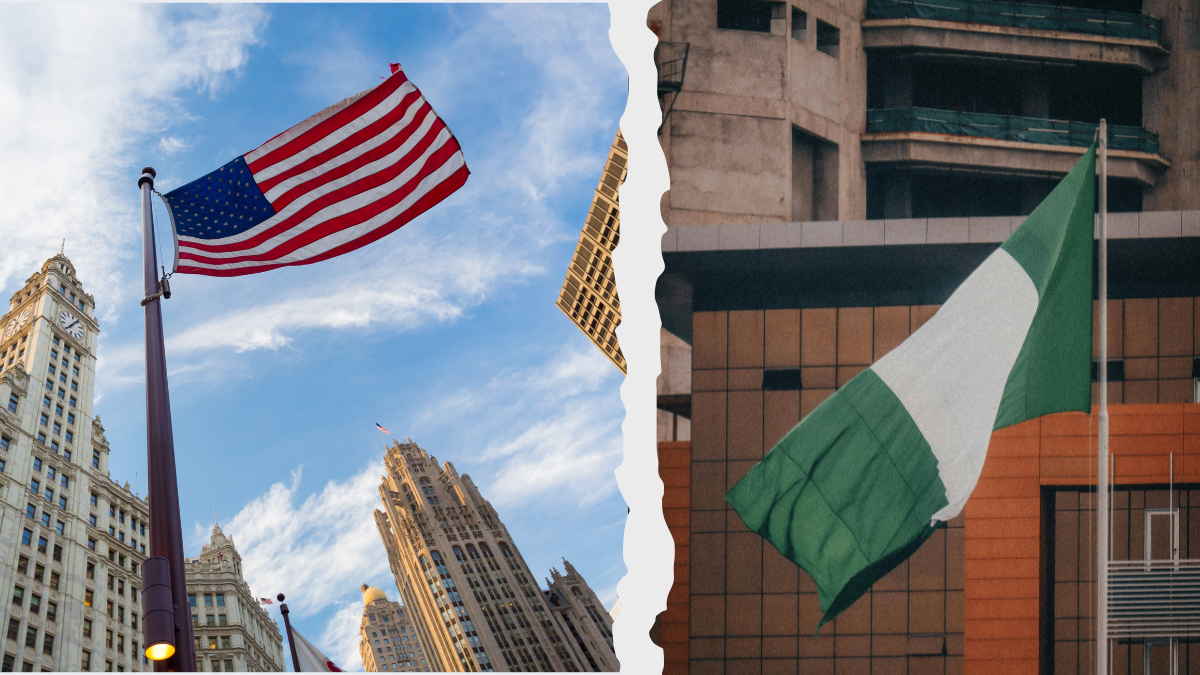
In early November 2025 the President of the United States, Donald J. Trump, publicly warned that the United States might take military action in Nigeria in response to what he described as mass killings of Christians.
The statement, which followed a U.S. redesignation of Nigeria as a “Country of Particular Concern” on religious-freedom grounds, set off an immediate storm of diplomatic responses, partisan debate, and intense discussion inside Nigeria about identity, security, and sovereignty.
This essay discusses what the threat means for Nigeria’s ethno-religious landscape, for international relations, and for the politics of the run-up to the 2027 elections. It draws on reporting and expert commentary from November 2025. (AP News)
Why it matters
President Trump’s public remarks in late October and early November 2025 were unusually blunt: he said the U.S. might deploy troops to Nigeria or conduct air strikes if the country did not halt what he characterized as the targeted slaughter of Christians. He ordered the Pentagon to prepare for potential action and paired the rhetoric with threats to cut or withhold U.S. development and security assistance.
The U.S. move to relist Nigeria as a Country of Particular Concern gave Washington a legal and rhetorical platform to escalate pressure. (AP News)
Why this matters: a sitting U.S. president openly discussing military measures against another sovereign state, even if framed as counter-terrorism or humanitarian intervention, is rare and legally and politically consequential.
The language singled out a religious group (Christians) as the specific victims prompting possible intervention. That specificity reframes what is, in reality, a complex pattern of violence in Nigeria that affects communities along lines that are simultaneously ethnic, economic, religious and local. (The Guardian)
Complex Nature of Nigeria’s Security
It is tempting to reduce the crisis to a binary narrative of Muslim perpetrators vs Christian victims. But scholars and journalists who study Nigeria’s violence repeatedly emphasise layered causes: competition over land and water, pastoralist-farmer conflicts, criminal banditry, sectarian insurgencies (e.g., Boko Haram and its offshoots), local power struggles, cattle rustling and the collapse of rural livelihoods.
In many theatres, attackers are motivated by resource grabs or local feuds as much as by ideology; victims include Muslims and Christians alike depending on the locale. Framing the insecurity purely as one-sided religious persecution flattens that complexity and can worsen local tensions. (The Guardian)
The practical implication is that any external actor, even with good intentions, risks misreading or misdiagnosing the local drivers. An intervention designed to “protect Christians” could, if poorly targeted, entrench communal fears, create perverse incentives for mobilization along religious lines, and inadvertently expose civilians to retaliatory attacks. Analysis by regional experts warned early on that visible foreign pressure could polarize Nigerian politics and even increase risks to some communities. (Hudson Institute)
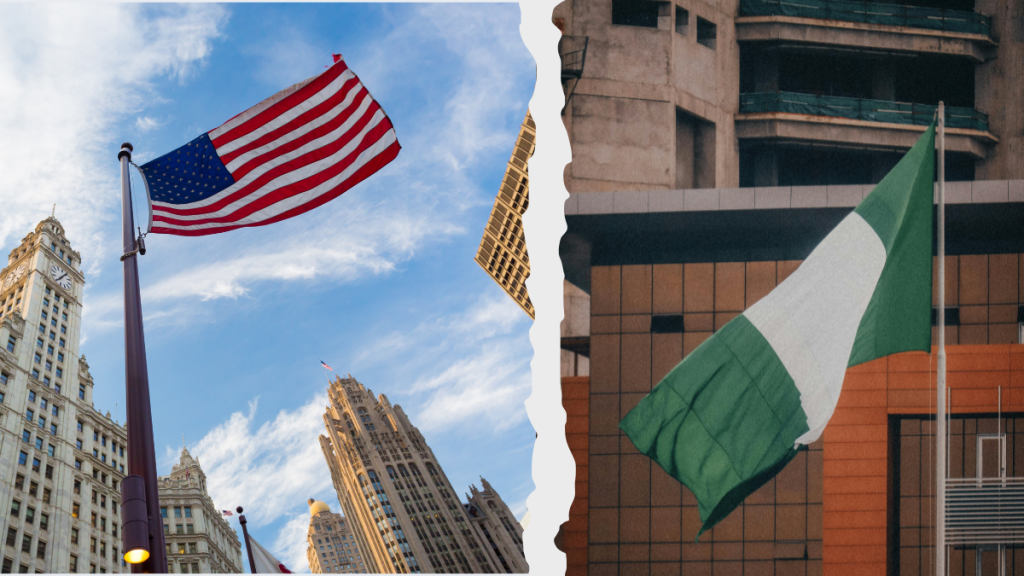
The Trilemma of Sovereignty, Diplomacy, and Intervention
International law and modern norms set narrow conditions for foreign military action: host-country consent, UN Security Council authorisation, or the narrow doctrine of humanitarian intervention where atrocities are imminent and the host state is unwilling/unable to respond. Most reporting in November 2025 emphasised that the Nigerian government, while acknowledging security problems, rejected the categorical portrayal of Christian genocide and insisted any assistance must respect Nigeria’s sovereignty. Nigeria’s presidency also moved quickly to engage diplomatic channels and to rally domestic institutions to show a response. (Reuters)
From a diplomatic perspective, the U.S. threat of strikes combined with aid leverage marks a pivot from quiet diplomacy and capacity-building to coercive signalling. That matters because long-term stability in Nigeria has historically depended as much on development and local peacebuilding as on kinetic action. Several NGOs and policy analysts cautioned that cutting off aid or pivoting to military options could harm effective community-level programmes that mitigate violence. (CSIS)
Overview of Historical Precedents
Many Nigerians referenced past U.S. interventions (Iraq, Libya, parts of the Sahel) to argue that foreign military intervention often leaves messy, enduring legacies: state collapse, power vacuums, and humanitarian harm.
Those historical comparisons fuel distrust and the argument that even well-motivated external intervention can worsen governance and security in the medium term. Analysts warn that without a clear exit strategy, robust local partnerships and a realistic assessment of on-the-ground actors, military measures rarely deliver sustainable peace. (Hudson Institute)
Yet there are also voices in Nigeria calling for stronger international pressure, arguing that external leverage could jolt a complacent domestic system. Those views are particularly strong among communities that feel abandoned by state security apparatuses and fear demographic and political marginalisation. The divergence in popular opinion — from relief at the prospect of decisive action to fear of foreign meddling — reflects deep fractures in how Nigerians perceive both the causes of violence and possible remedies. (Al Jazeera)
Implications for 2027
Trump’s remarks arrived in a fraught domestic political context. President Bola Tinubu’s administration (and its security strategy) was instantly under pressure: critics asked why domestic forces had not prevented the killings; supporters framed the U.S. posture as externalising a sovereign problem and rallied national pride. In electoral terms, the episode strengthens narratives on both sides:
For the ruling party, the episode allows a rallying cry of sovereignty and a claim to defend national dignity against foreign threats while simultaneously being forced to show tangible security gains. And for the opposition and regional leaders, the U.S. spotlight can be leveraged to highlight government failure and mobilise voters angry about insecurity.
These dynamics could intensify polarisation ahead of 2027: security becomes an electoral wedge, and religious or ethnic identities may be securitised by political actors seeking advantage. Experts warned that this could increase the risk of localized reprisals or opportunistic violence as actors reposition politically. (Atlantic Council)
Will the U.S. Militarily Intervene In Nigeria?
Even among U.S. security professionals there was scepticism that a “boots-on-the-ground” solution would be simple or effective. Options typically discussed publicly were a mix of: intelligence support, limited air strikes against terror cells, advisory deployments, or special operations in cooperation with Nigerian forces. Each option carries legal, operational and political costs:
- Air strikes risk civilian casualties and blowback.
- Special-operations raids require precise intelligence and reliable local partners.
- Advisory roles can be useful but require trust and clear accountability to avoid enabling abuses.
Moreover, U.S. action would need regional diplomacy (with ECOWAS, African Union, and West African neighbours) and likely UN engagement to avoid being portrayed as neo-imperial adventurism. Analysts emphasised that military action alone, without governance and development strategies, is insufficient to address the root causes of violence. (Military.com)
Risks of a Narrowly Religious Narrative
Trump’s focus on Christians as the primary victims crystallises an inherently risky framing. It simplifies multi-causal violence into a binary of persecutor and persecuted defined by religion. Trump’s statement risks encouraging identity-based mobilisation (actors claiming to defend their religious group); Fueling selective international sympathy that may leave equally affected communities (including Muslims) feeling excluded; and incentivising political actors to weaponise the narrative for partisan ends, particularly during elections.
Public policy responses rooted in protection for all civilians and in tackling drivers such as criminal networks, land insecurity and youth marginalisation are likeliest to produce sustainable reductions in violence. (The Guardian)
Paths Forward
For a chance to gain meaningful progress on the issue of insecurity in Nigeria, the following actions should be rigorously pursued:
- Expand targeted, intelligence-driven cooperation. If the U.S. offers technical intelligence and logistics support to Nigerian forces with clear safeguards and oversight, it could improve operational effectiveness without large troop deployments. But this must be accompanied by accountability to avoid abuses. (Reuters)
- Protect and scale community peacebuilding. International donors should avoid cutting aid to proven community-level programmes; many peacebuilding efforts are low-cost and effective in reducing intercommunal violence. Cutting them risks worsening the situation. (CSIS)
- Frame assistance as human protection, not religious policing. Any external support should prioritise all civilians and the legal protection of human rights, to avoid the perception of favoritism and to reduce retaliatory dynamics. (Crisis Group)
- Domestic political management. Nigerian leaders must show credible, transparent security plans and faster civilian protection measures to undercut narratives that only foreign action can help. Political actors should be discouraged from instrumentalising religious fear for short-term gain. (Punch Newspapers)
Conclusion
The November 2025 episode is both a crisis and a test: a crisis because a major external power publicly threatened military options against a sovereign state; a test because how Nigeria, the United States, regional organisations and global civil society respond will shape not just immediate security dynamics but also longer-term political trajectories.
An effective response will combine accurate diagnosis of local causes, calibrated security cooperation, sustained investment in community resilience, and political leadership that refuses to reduce citizens to monolithic religious categories. Without that mix, the cycle of violence is likely to persist — and the risks of escalation, miscalculation and political polarisation will grow as Nigeria approaches 2027. (AP News)