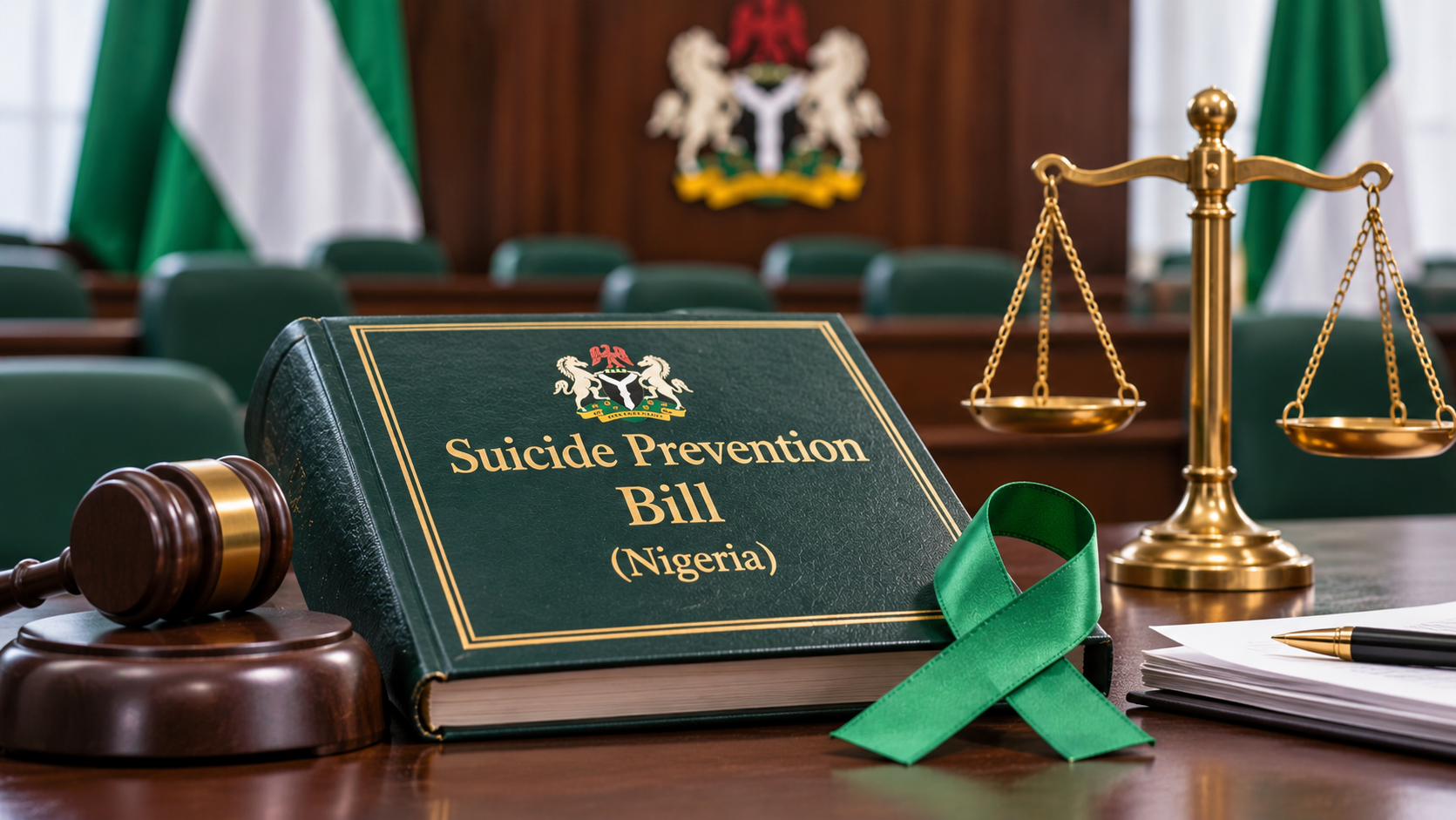
The Nigerian Constitution, under Section 327 of the Criminal Code and Section 231 of the Penal Code, states that anyone who attempts suicide and fails could face up to one year in prison. Over the years, this part of the constitution has raised controversies and discussion in the Nigerian Senate.
In the past few days, this topic has also been deliberated on with a view to amending the law. In one of the discussions, the Senate President, Senator Godswill Akpabio in support of the existing law made the controversial statement:
“If you attempt suicide, make sure you die. Anyone who attempts and fails will go to jail.”
This statement threw the entire nation into uproar and has motivated the call for a proposed suicide prevention bill to be added to the constitution. But, what does the proposed bill say? Suppose the bill is passed into law, what are the merits and the demerits of the proposed law?
This article will dissect all the questions about the proposed suicide prevention bill. Let’s first take a look at what the proposed suicide prevention law says.

What Is the Proposed Suicide Prevention Bill in Nigeria About?
The proposed suicide prevention bill according to the Federal Ministry of Information and National Orientation, wants to decriminalize attempted suicide in Nigeria. To put it in simple terms, the proposed bill wants Nigeria to stop treating people who survive suicide attempts as criminals and start treating them as people who need help.
So, instead of looking to serve those who survive suicide with jail terms, the proposed bill wants to replace this by providing medical attention and counselling to the affected individuals. In addition, the bill is proposing a 24-hour emergency helpline to help those affected get needed help as soon as they feel depressed.
The bill initially came into the discussion in 2024 and was sponsored by Senator Asuquo Ekpenyong. However, it has been brought to the fore again recently and has passed second reading at the Senate.
Despite the good motive behind the bill, many have raised concerns over the content of the bill saying that it could come with severe demerits. But, first, let’s take a look at the merits of the proposed suicide prevention bill.
Pros of the Proposed Suicide Prevention Bill in Nigeria
These are the positives that would be derived from the implementation of the suicide prevention bill into the Nigerian constitution:
1. It Could Stop Treating Suicide Survivors as Criminals
One of the positives of the proposed suicide prevention bill is the fact that suicide survivors would no longer be perceived as criminals under the law. This is important because someone who attempts suicide and survives needs medical attention and not imprisonment.
Take, for instance, a person battling depression due to unemployment who attempts to take his life and survives. You’ll agree that the first concern shouldn’t be to send the person to prison. On the contrary, the person should be provided with medical and emotional support to overcome that problem.
So, having the law confirm that would go a long way in helping individuals cope with the stigma that comes with mental problems.
2. Encourage Victims to Seek Help
Another benefit of the proposed bill is that it would make people more comfortable to talk about their suicidal thoughts and seek help even before things get out of control.
According to the World Health Organization (WHO), criminalizing suicide attempts can discourage people from seeking timely help because of the fear of “legal consequences”that would result, as well as “stigma”from the society that they come from.
This is true because many mental health problem survivors have said that they were afraid of telling their stories because of the fear of being mocked. As a result, they bottled up their issues and overcame them by themselves.
So, the proposed bill when passed into law, would help solve that issue. It would drive people to go to hospitals or even a therapist to share their suicidal thoughts and receive help.
3. Encourage Families to Report Suicide Attempts
Are you aware that the fear of arrest does not affect only the person experiencing suicidal thoughts; it can also affect their family members who stay with them?
Well, to get a better understanding of this, you can imagine a scenario where a single mother whose only son has just survived a suicide attempt. Instead of immediately taking him to a hospital or a place where he can receive help, she becomes worried that reporting the incident could expose him to police investigation.
You’ll agree that she would be hesitant to report her son and as such, her son would remain in that state for a long time. In fact, if caution is not taken, her son’s case would turn into an emergency because she has decided to protect her son from imprisonment.
In this case, the proposed suicide prevention bill becomes more important. That mother would have no reason to hide her son’s condition and would even hurry to seek medical help. In addition, it would help the healthcare sector easily identify the root cause since early detection is key in solving mental health problems.
At this point, you’ve read about the proposed bill and the positives of the proposed suicide prevention bill in Nigeria. Now, let’s analyze the possible cons of the proposed bill if implemented into the Nigerian constitution.
Possible Cons of the Proposed Suicide Prevention Bill in Nigeria
These are the negative concerns surrounding the proposed suicide prevention bill in Nigeria:
1. Removing Criminal Punishment Could Encourage More Suicide Attempts
One of the main worries raised by those who are against the removal of the imprisonment sentence is that it could make people more encouraged to attempt suicide. In fact, it was this sentiment that led the Nigerian Senate President, Godswill Akpabio, to make the statement outlined in the introduction section of this article.
He argued that attempted suicide should remain punishable because removing the consequences of jail time could encourage more people to engage in the act. The Senate President is of the reasoning that the fear of being punished would prevent people from taking their own lives or even seeing it as a solution.
2. Lack Of Personnel in Hospitals For Mental Health Cases
Another set of people believes that our hospitals lack enough personnel to treat mental health problems. So, removing the possibility of imprisonment is fine for these ones, but what then happens when someone is taken to the hospital and there is no professional available to render help?
Well, the numbers actually show that these concerns are valid. Yes, a recent study in 2026 showed that in 2024, there were about 350 qualified psychiatrists in Nigeria. However, this then meant that the ratio of doctors to patients was 1:100,000. That is, a doctor is, on average, responsible for 100,000 patients. How ridiculous!
Well, the same study also found out that only 10-15% of that actual number received treatment. So, what these numbers tell us is that even if the bill becomes law, many survivors could still struggle to find the help they need
For example, imagine someone in a rural area who survives a suicide attempt but is unable to see a specialist to take care of him at a hospital. One can already guess his state if his condition is prolonged with no immediate professional care.
3. The Proposed Bill May Never See the Light Of Day
The truth is that Nigeria, as a country, has introduced several laws and policies to address important problems in the past, but just passing a law does not automatically mean that people will benefit from it.
So, the point is that the success of the proposed Suicide Prevention Bill will depend on whether the government is willing to provide the money, workers, and facilities needed to make it work.
For instance, do you know that the National Mental Health Act was signed into law in 2023, but mental healthcare remains difficult to access for many Nigerians?
So, it’s not just about deliberating on the bill, but about putting provisions in place for the bill to work and function as it should. The issue of suicide should not just be folded into a file. It is one that should be handled with serious attention.
Conclusion
The proposed suicide prevention bill is something that calls for joy. Yes, this means that you no longer need to be afraid of being imprisoned if you suffer from mental health problems. However, the issue to think about is not about the passing of the bill, but whether the bill would be implemented to the proper degree. Is the government ready to provide the required funding and personnel in order for this bill to work out? Or is this another subject that would just be written on paper without the necessary backing? Well, only time will tell.