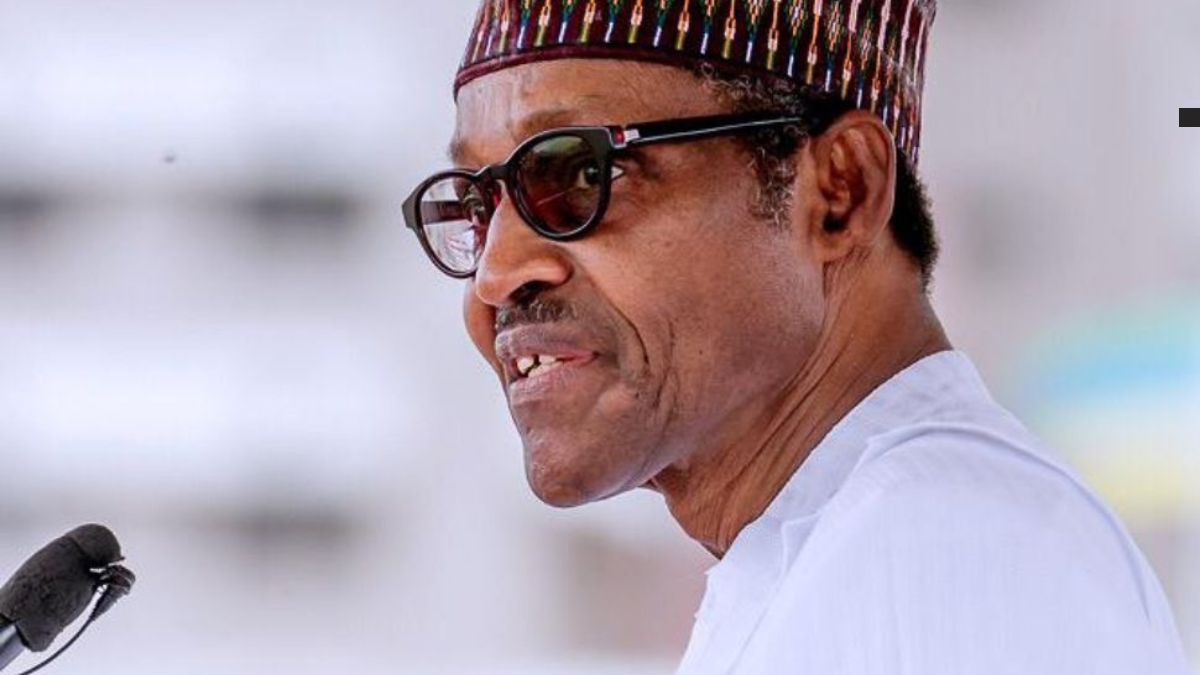
On the evening of July 13, 2025, news broke that President Muhammadu Buhari had died. For many Nigerians, it was not just the passing of a man; it was the end of an era. An era filled with contradictions, symbolism, pain, pride, and for many, unfulfilled promises. Buhari was not just a politician or a president. He was a phenomenon, a man whose life embodied Nigeria’s struggle between discipline and disorder, between nostalgia and hard realities.
As someone who lived through his civilian tenure, I believe it’s important to look back, not just politically, but socially. What did Buhari mean to ordinary people? How did his policies touch our lives, our conversations, our kitchens, our campuses, our weddings? This is my attempt to remember Buhari through the eyes of those who lived under him.
Soldier. Dictator. Democrat?
When I was growing up, Buhari’s name was already folklore. My parents talked about him as the no-nonsense general who wouldn’t hesitate to arrest a corrupt minister or make civil servants queue under the sun for coming late to work. He became Head of State in 1983, and though he lasted less than two years, his legacy as a disciplinarian endured. After his overthrow in 1985 and subsequent 30 months of house arrest, one might’ve thought that was the end. But Nigeria, in all its unpredictability, had more in store. Decades later, Buhari would reemerge, not as a soldier this time, but as a democratic candidate, vying for the presidency in 2003, 2007, and 2011 before finally clinching it in 2015.
That victory was more than politics, it was emotional. For many people, especially in Northern Nigeria, Buhari was hope personified. He had resisted the system long enough and was now ready to fix it.
The Cult of “Sai Baba”
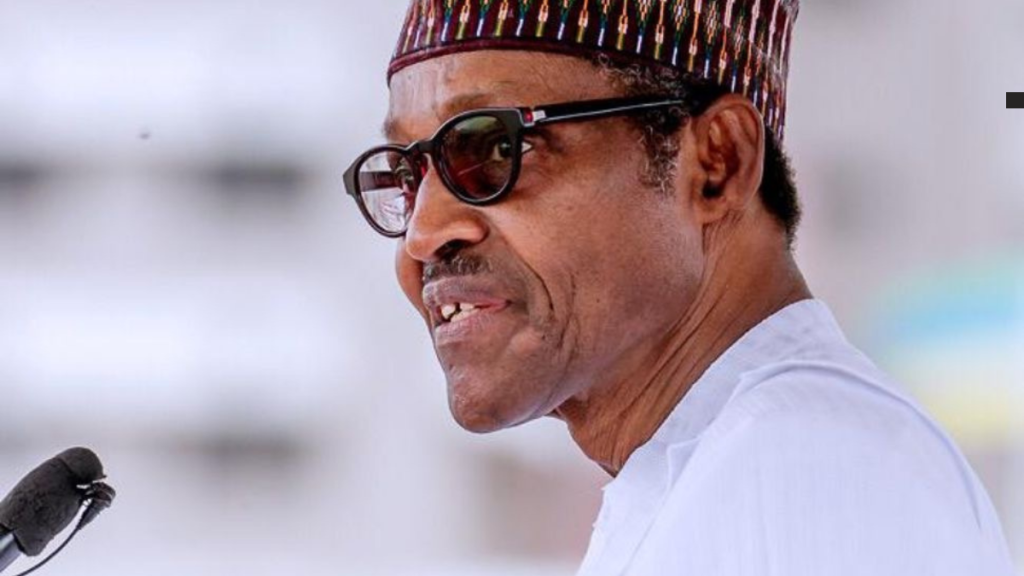
Let’s not pretend: Buhari had a cult following that defied logic. You’d see people wearing his face on their clothes, calling him “Baba,” and swearing he was sent by God to rid Nigeria of corruption.
Why? Because he represented something we had longed for: integrity. Nigerians were tired of the flashy, thieving politicians who danced at rallies and disappeared after elections. Buhari, with his modest lifestyle and stern face, felt like a breath of fresh air.
I remember how people in my town said, “If Buhari wins, spaghetti will be N70 again.” Young men delayed marriage, convinced that Baba would bring down the cost of living. It was naïve, yes, but it shows the kind of faith people had in him. In a country where disappointment is a way of life, Buhari’s promise felt like a moral revival.
“I Belong to Everybody…”
When Buhari took office in 2015, his inaugural speech was powerful. The line that stuck with everyone was: “I belong to everybody, and I belong to nobody.” It was bold. It was reassuring. But like many Nigerians, I watched over the years as that promise unraveled. His appointments were glaringly lopsided, favoring his northern base. Critics spoke of a “kitchen cabinet” and whispered about the unelected “cabal” that allegedly controlled the presidency.
The same man who said he belonged to all ended up being seen as distant and tribalistic. For many in the South and Middle Belt, it felt like exclusion all over again. And so began the disillusionment.
The poor who had voted for him to fight corruption were beyond shocked when Buhari granted state pardon to convicted Nigerians in the persons of Joshua Dariye and Jonah Jang, among others. That act violated the sanctity of his famous line. It confirmed that Buhari now belongs to the elites, and the poor could only watch as their horrors become reality.
“The Other Room” and Gendered Power
Then came one of the more confusing moments: Buhari, standing beside German Chancellor Angela Merkel, told the world that his wife belonged to “the kitchen, the living room, and the other room.” We laughed. Then we cringed. Behind the joke lay a deep truth about the gender roles entrenched in northern Nigeria. Buhari had long refused to recognize the Office of the First Lady, and his wife, Aisha Buhari, had begun speaking out against his government.
Ironically, his attempt to confine her to “the other room” turned her into a symbol of resistance. Aisha became one of his loudest critics, breaking the norm in a system where women are often expected to be silent supporters. It showed how even in patriarchal settings, women find their voice, especially when pushed too far.
The High Hopes of the Hungry
There’s a social ritual around food in Nigeria. Meals bring families together, define status, and even mark success. Buhari’s presidency promised to make food affordable again. Instead, we got recession, inflation, and scarcity. I remember how in the majority of neighborhoods, rice became a luxury. People shifted to “local rice” out of necessity, not choice.
His policy to ban rice importation aimed to boost local farming, but in practice, it redefined dining tables across the country.
Suddenly, Friday jollof wasn’t so common. Fried rice at weddings became rare. Families cut down meals. The rich hoarded imported rice; the poor endured the stones and chaff of local varieties. Food became a symbol of broken promises.
ASUU Strike: A Generation Interrupted
If you want to understand how Buhari’s government failed young people, look no further than one of the longest ASUU strikes in Nigerian history, lasting eight months.
In fact, the president famously described Nigerians as “Lazy youths” , a statement that angered the youth and created a long series of trends that resulted in nothing in the end. During the ASUU strike, university campuses shut down. Students went home, took up odd jobs, lost focus, and some never returned. One cousin of mine became a tailor during the strike and never went back to school. Another got pregnant.
The strike wasn’t just about wages and conditions of our public universities, it was about a generation losing its rhythm. In a country where education is the key to social mobility, Buhari’s government felt like it slammed the door in the faces of millions of students.
In fact, in one of his interviews, Buhari told Nigerian youths that the government has no jobs for them. A stark verdict and a dagger to the heart of young, hopeful Buharists
A Leadership of Silence
One thing that frustrated me and many others was Buhari’s quiet leadership. He rarely addressed the nation, even during crises. He took six months to appoint his cabinet in 2015, and then stuck with almost the same ministers for eight years.
Where was the urgency? Where was the accountability?
This static style created a feeling of helplessness. When fuel prices rose, silence. When people were kidnapped, silence. When inflation peaked, silence. In a country hungry for empathy, Buhari felt emotionally absent.
Security: One Fire Out, Another Lit
To be fair, Buhari did weaken Boko Haram. When he came in, the group was terrorizing the northeast. By his second term, they had lost much ground.
But then came banditry and kidnappings, especially in the northwest. Students were abducted from schools, and travelers were hijacked on highways. I lost count of the number of times I heard: “Bandits have attacked again.”
It was a paradox: we celebrated victories in one region while mourning failures in another. The security gains were real, but so were the fears.
The Currency Redesign Saga
2022 was the year Nigerians learned what it meant to be rich in paper but poor in cash. Buhari’s currency redesign policy led to a cash crisis that paralyzed everyday life. Markets became chaotic. People stood for hours at ATMs and still left empty-handed. The
Currency redesign revealed how weak Nigerian banks are as bank transfers failed and the network went off for hours without end while Nigerians helplessly roamed about looking for how to meet their demands without cash.
Many died in the hospitals as they had no cash to settle their bills and millions suffered in silence because they have neither case nor digital Fiat to begin with. But all that wasn’t new, Buhari tried a similar move back in 1984 as Head of State. The social
consequences were the same: chaos, confusion, and collapse.
Songs of Sai Baba
One of the unexpected but fascinating impacts of Buhari’s presidency was his influence on Northern music. Artists like Dauda Kahutu Rarara became household names by singing his praises. Songs like “Masu Gudu Su Gudu” were more than entertainment, they were political tools, rallying people and shaping narratives. For Rarara and others, Buhari wasn’t just a leader, he was a muse. These songs will survive him. They’ll be played at weddings, in buses, on the radio, becoming part of the cultural memory of his time.
“A Kasa, A Tsare, A Raka”: The Call for Vigilance
One thing I’ll always respect Buhari for is his slogan: “A kasa, a tsare, a raka.” Meaning: vote, protect the vote, and escort the results. It was a call for electoral vigilance, and it worked. For the first time in a long while, people stayed behind at polling units, watched the vote count, and demanded transparency.
In a country plagued by electoral fraud, Buhari gave us a civic mantra. He gave us a way to reclaim our power as voters. That, to me, was one of his finest contributions to democracy.
Final Thoughts
So how will history remember Buhari? Not as a saint. Not as a villain. But as a man who reflected our national contradictions. Buhari reflected our longing for order and our tolerance for injustice, our hunger for hope and our readiness for heartbreak.
Buhari’s presidency wasn’t stellar, but it was socially significant. It changed the way we eat, talk, protest, marry, joke, sing, and even wait in bank queues.
He reminded us that a president’s decisions are not abstract, they’re deeply personal. They affect the price of bread, the sound of wedding songs, the silence of classrooms, the fear on highways.
In remembering Buhari, let’s not sanitize or demonize. Let’s document what it truly felt like to live through his era, for the sake of history, for the sake of memory, for the sake of us.
May his gentle soul continue to rest in peace. Ameen.