Charity has always meant kindness, compassion, and the willingness to support people in need. However, social media has changed how some content creators present charitable activities. Today, individuals often record themselves distributing food, giving money to strangers, and supporting struggling families. These videos attract thousands of views, raising questions about the relationship between generosity and content creation.
While filming charity can inspire others and attract support, it can also raise concerns about privacy and human dignity and genuineness of the act. This raises the question: should people receiving assistance become part of another person’s online presentation?
The Growing Trend of Filmed Charity
Social media has created opportunities for individuals and organisations to showcase charitable activities. People record visits to orphanages, food distributions, financial assistance and community outreach programmes.
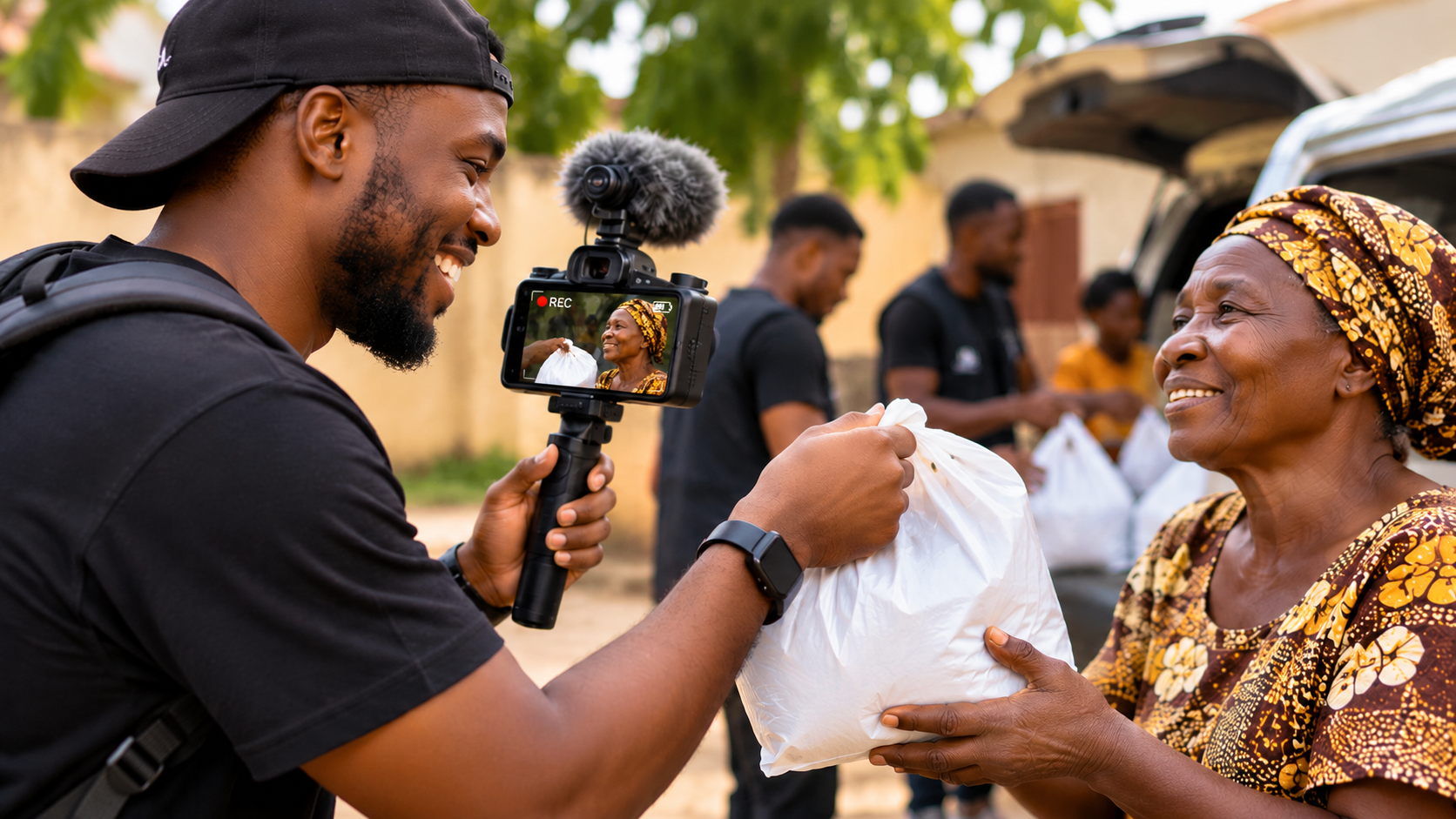
These videos often follow a similar pattern. A creator approaches someone in need, explains their situation and presents a gift. The camera captures the recipient’s reaction, sometimes including tears and expressions of gratitude.
Some videos inspire viewers to support charitable causes. Others attract criticism because they focus on the emotional reactions instead of the assistance itself.
For some creators, recording provides evidence of their activities. Others use these videos to grow their audience, attract partnerships or promote their personal brands. The challenge is distinguishing responsible documentation from content that exploits another person’s hardship.
When Charity Becomes Entertainment
The major concern of filming charity content is how some creators present people receiving assistance. A video might focus more on someone’s poverty than on the support they receive. The camera may focus more on their worn clothes, poor living conditions or emotional reactions. Some creators also make recipients share their painful personal experiences.
Although such content can generate sympathy, it can turn someone’s hardship into public entertainment.
Imagine a creator visits a struggling family with food supplies. Instead of focusing on the donation, the video highlights their living conditions and financial difficulties. The family receives assistance, but thousands of strangers also gain access to their private life.
This begs an important question: would the creator publish the same footage if it attracted no views, likes or comments?
Not every creator has selfish intentions. Some genuinely want to encourage generosity. Nevertheless, social media rewards attention, and emotional content often attracts engagement.
Charity should not require people to display their suffering before others appreciate their circumstances.

The Dignity of People Receiving Assistance
People who need financial or material support deserve dignity and respect. Their circumstances should not define how others treat them.
Some charitable videos portray recipients as helpless individuals, overlooking their abilities, ambitions and personal identities. Someone receiving food assistance may also be a parent, student, business owner or skilled worker.
The International Committee of the Red Cross addresses this concern in its guidelines on ethical content gathering, encouraging communicators to represent vulnerable people with dignity.
Content creators should apply the same principle. Before publishing someone’s image or personal story, they should consider whether the presentation respects that person’s dignity.
Does Consent Make Every Charity Video Acceptable?
Consent matters, but it becomes complicated when someone receives assistance from the person holding the camera.
Imagine a creator offers food supplies to a struggling family and asks permission to record the donation. The family may agree because they fear losing the assistance if they refuse.
In such circumstances, agreement does not always mean genuine consent.
People should understand why someone wants to record them, where the footage will appear and how others might use it. They should also be allowed to decline without losing access to assistance if they wish.
Receiving help does not automatically mean agreeing to become part of someone’s online content.
According to Médecins Sans Frontières’ image use and consent policy, visual storytelling has an important role in humanitarian work. However, it must respect the people featured.
Why People Film Their Charitable Activities
It would be unfair to assume that everyone who records charitable activities does it for their selfish interests. Some people document their generosity to encourage donations and inspire others. Others use their platforms to attract support for communities facing difficult circumstances.
For example, a creator who highlights the poor condition of a community school might attract individuals, businesses or organisations willing to help.
Filming can also help charitable organisations show donors how they use contributions. In these situations, documentation serves a practical purpose.
The problem is not necessarily the camera. It is what the creator does with it and how the content represents the people involved.
Charity, Personal Branding and Social Media Engagement
There is nothing wrong with building a public profile while supporting people in need. Creators can use their influence to attract donations and encourage positive action.
However, personal branding becomes questionable when recipients serve mainly as promotional material.
For instance, a creator might record every donation while placing their name or logo prominently in each video. The content could end up focusing more on the creator’s generosity than the recipient’s needs.
Creators do not need to hide their involvement. However, they should avoid presenting themselves as the messiah to problems that require collective action.
Should People Be Able to Receive Help Without Cameras?
Absolutely.
People should not have to appear in photographs or videos before receiving assistance. Neither should they have to share personal stories or publicly express gratitude to be assisted.
Some recipients may appreciate a donation but prefer to keep the experience private. Others may feel uncomfortable appearing on social media.
Creators can still document their activities without identifying every recipient. They can record the preparation of food packages, purchase of supplies or distribution process without focusing on individual faces.
The Responsibility of Content Creators and Audiences
Creators should think beyond the immediate benefits of publishing a video. They should consider whether recipients freely agreed to appear and whether the content protects their dignity.
Audiences also influence the direction of online charity. Every like, comment, share and view contributes to a video’s visibility.
When viewers reward content that exposes people’s suffering, creators may feel encouraged to produce more of it.
Audiences should therefore consider how creators present the people they help. Does the video encourage meaningful support, or does it simply invite viewers to praise the person behind the camera?
Supporting responsible content can encourage more respectful charitable activities.
Conclusion
Filming charitable activities is not totally wrong. It can inspire generosity, attract donations and draw attention to social problems. However, how people record and publish these activities matters.
The camera should not determine how someone receives assistance. Neither should a person’s hardship become the price they pay for someone else’s online recognition.