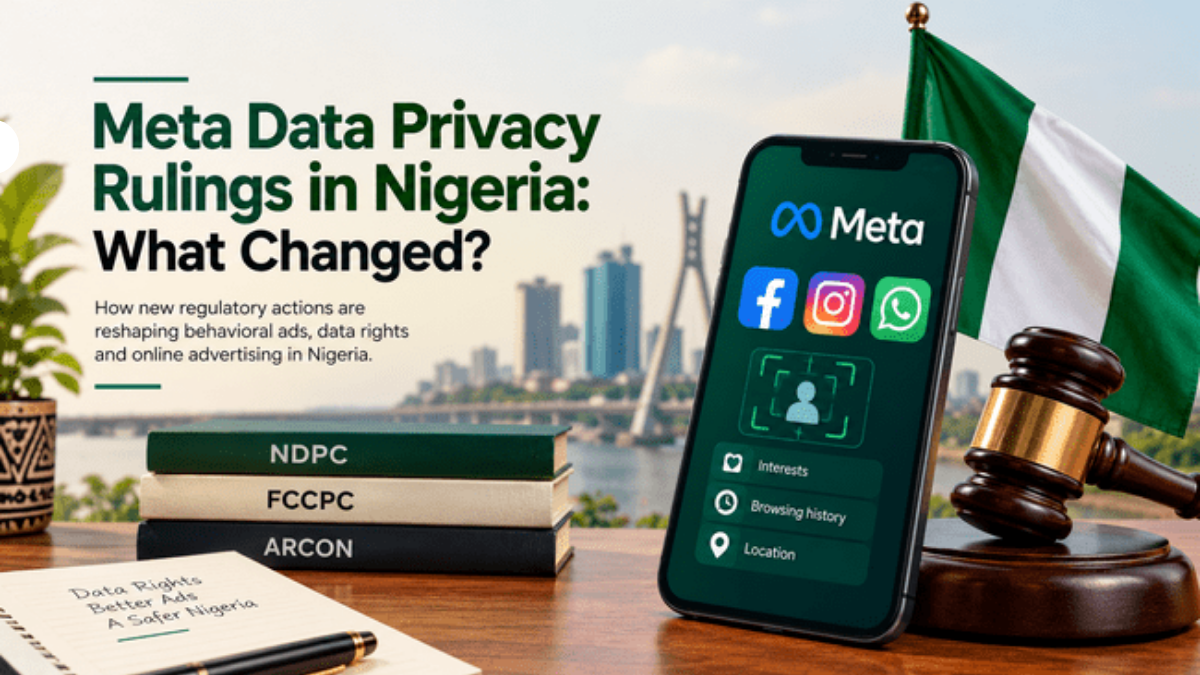
The Meta data privacy rulings in Nigeria have changed how regulators, businesses, and everyday users think about online advertising. Nigerian agencies have announced fines against Meta totaling roughly $290 million. One case focused squarely on behavioral advertising, the kind that follows you around Facebook and Instagram. If you run ads, manage a brand, or scroll every day, this affects you. Here is what the regulators decided, where each case stands, and what it means for behavioral ads.
What Behavioral Ads Are and Why Regulators Care
Behavioral ads target people based on what they do online. The platform tracks the pages you follow, the videos you finish, and the links you tap. It builds a profile from those habits. Advertisers then pay to reach people who fit that profile.
For a small business, this feels like magic. A skincare seller in Lagos can reach women who love beauty content without spending a fortune. The trade-off is that the whole system runs on personal data.
Nigerian law takes that data seriously. The Nigeria Data Protection Act 2023 gives people control over how organisations collect and use their information. It also sets rules on lawful processing and consent. When people never gave real consent, behavioral advertising becomes a legal problem.
Meta Data Privacy Rulings in Nigeria: The NDPC Case
The Nigeria Data Protection Commission (NDPC) moved first on behavioral ads. On 18 February 2025, it fined Meta $32.8 million and issued eight corrective orders. The regulator said Meta violated users’ privacy rights through behavioral advertising on Facebook and Instagram.
The commission listed several complaints. According to the NDPC, Meta used data for behavioral ads without explicit consent and processed the data of non-users. It also failed to file mandatory compliance audits and moved user data abroad without authorisation.
The orders were just as specific. Meta had to revise its privacy policies, seek user consent before behavioral advertising, and run a data protection impact assessment. It also had to stop moving user data outside Nigeria without prior approval.
Meta pushed back. The company went to court and argued that the NDPC had denied it a fair hearing. Then both sides changed course. They signed settlement terms dated 30 October 2025, and the Federal High Court in Abuja entered them as judgment. The terms were not made public at the time. Later, BusinessDay reported that the deal dropped the penalty and left Meta paying only the government’s legal costs. The NDPC defended the settlement, but some lawyers criticised it.
The $220 Million FCCPC Ruling Against Meta and WhatsApp
A second case ran on a separate track. The Federal Competition and Consumer Protection Commission (FCCPC) fined Meta and WhatsApp $220 million on 19 July 2024. That followed a three-year investigation into WhatsApp’s privacy policy. Investigators found that Nigerian users had little real choice and weaker protection than users elsewhere.
Meta appealed. The company argued that data protection belongs to the NDPC, not the FCCPC.
The Competition and Consumer Protection Tribunal rejected those arguments on 25 April 2025. It upheld the fine and nearly all of the FCCPC’s orders, awarded $35,000 for investigation costs, and found that the FCCPC acted within its authority. The tribunal also told Meta to stop sharing Nigerian users’ data with third parties, including Facebook.
The dispute did not end there. WhatsApp said it would seek a stay and appeal the ruling. A third regulator, the Advertising Regulatory Council of Nigeria (ARCON), issued a separate $37.5 million fine against the company.
What the Meta Data Privacy Rulings in Nigeria Mean for Behavioral Ads
These cases point the same way. Nigerian regulators will act on data privacy, and they will act on advertising. For advertisers, three things change.
Consent now carries weight. A buried checkbox or a forced policy update no longer feels safe. The NDPC ordered express consent for behavioral ads, so the bar is higher than before.
Location matters too. Orders against moving data abroad show that regulators want to know where Nigerian data goes. Platforms and advertisers should expect more questions about that.
Finally, more than one agency is watching. The NDPC, the FCCPC, and ARCON each took action. A company that satisfies one regulator can still face another.
[Internal link: related Applied Worldwide article on digital life or social media in Nigeria]
Practical Steps for Nigerian Advertisers
Most Nigerian advertisers will never face a $220 million fine. Still, many businesses count as data controllers under the law, so they carry duties of their own. When you install a tracking pixel or upload a customer list, you handle personal data. These habits keep you on safer ground:
- Write a plain privacy notice. Tell visitors what you collect, why you collect it, and who sees it.
- Ask before you track. Add a consent banner for cookies and pixels instead of switching them on silently.
- Treat customer lists with care. Upload only the contacts who agreed to hear from you.
- Be careful with young audiences. Avoid targeting groups that include children.
- Know where your data travels. Check which tools store or process your customer data abroad.
- Check the advertising rules. ARCON fined Meta too, so regulators look closely at adverts.
- Keep records. Save proof of consent and your privacy notice in case anyone asks.
This list is general guidance, not legal advice. A Nigerian data protection lawyer can review your specific setup.
Who Controls Your Data? The Bigger Picture
Behavioral ads raise a plain question: who decides how much of your life becomes data, and who profits from it?
The Meta cases show Nigeria answering that question in public. They also show a country insisting on equal treatment. Regulators complained that Nigerians received weaker protection than users elsewhere. Privacy should not depend on where you live.
Young people deserve special attention here. Children cannot judge what profiling really means. Parents, teachers, and youth leaders can help by talking openly about privacy settings and ad choices.
[Internal link: related Applied Worldwide article on youth, education, or technology in Nigeria]
What Comes Next for Meta Data Privacy Rulings in Nigeria
The Meta data privacy rulings in Nigeria show regulators are done waiting. One case ended in a court-approved settlement that later drew criticism. Another produced a tribunal ruling that Meta fiercely resisted. Both pushed toward real consent and real accountability.
If you advertise in Nigeria, review your data habits now. If you use these platforms, check your ad settings and ask questions. The rules keep moving, and informed users and careful businesses will adapt fastest.