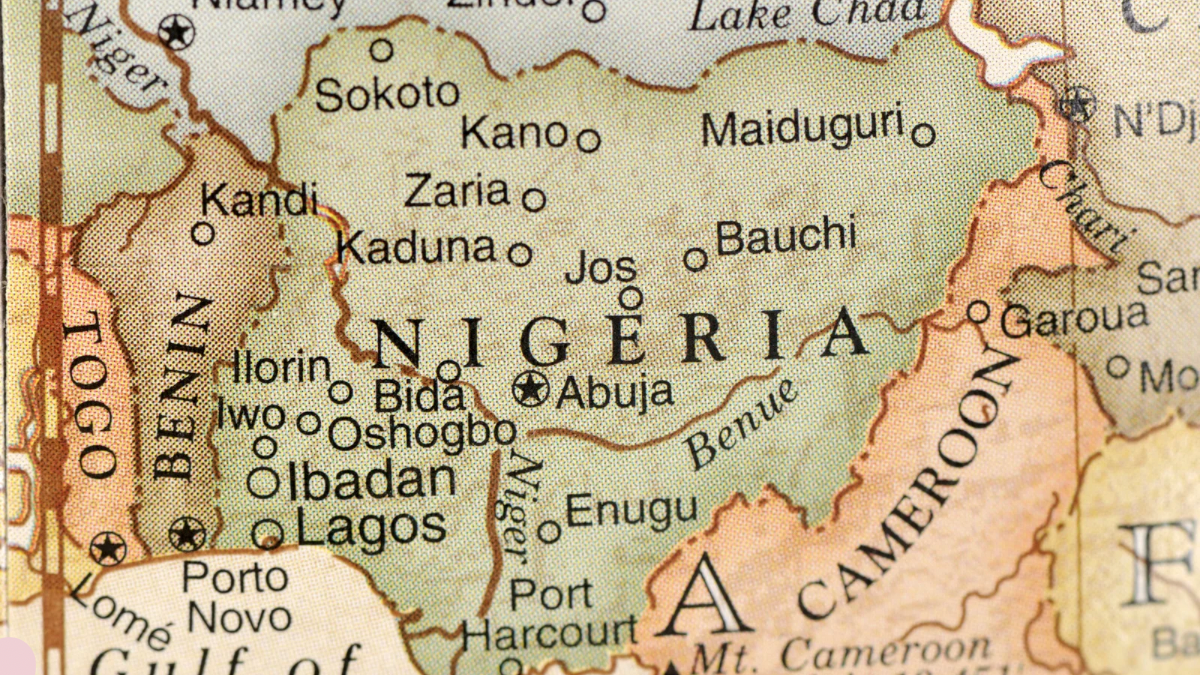
Crises are unpleasant situations that involve conflicts among contenders. And when elephants fight, destructive nations are involved and the citizens suffer. This is the case with the US-Iran war. Nigeria, despite being thousands of kilometers away, is still affected by the clash of these two nations. But what’s the history behind this conflict? This pandemonium started years ago between Israel and Iran but over time has degenerated to involve the entire Middle East. And even though it is not quite a world war, the effects have been global, and even Nigeria, all the way in Africa, has been affected.
Below are some of the ways:
Food Crises
Nigeria’s food crises have reached damaging levels. Unfortunately, we can’t accurately estimate the percentage of destruction to the populace. This is one of the multiplier effects of the closure of the Strait of Hormuz and its multiplier effect resulting in a petroleum hike in Nigeria. Feeding has become more expensive than last year. The unstable prices of food products have made food budgets unreliable. People feed on what’s available and not what they deserve or desire.
Farming has become unattractive hence the availability of a limited labor force. The few available are being threatened on a daily basis. When food production is at its lowest ebb, the producers toil with the money available, thereby promoting a price hike. They also create artificial scarcity in order to increase their prices. Farmers now produce for subsistence, not for commercial purposes.
Transportation
Since the deregulation of fuel prices in Nigeria,caused by the crises in the Middle East, thanks in no small part to the war in Iran, transportation has been unpredictable. The astronomical fuel prices have made movement within Nigeria unbearable.
And when tourism becomes hectic, relationships seem distant. The collapse of rail transportation and the limited vehicles worsen the difficulties triggered by the crises. Most towns and villages currently patronize commercial motorcycles and many Nigerians have been maimed or amputated by accidents involving motorcycles and other vehicles.
Nigerian Oil and Inflation
The global distortion of petroleum distribution chain caused directly by unrest in the Middle East also affected Nigeria being a part of the global village. Pp look upDespite having massive oil reserves, Nigeria depends mostly on imported refined oil. This makes the economy dependent on international market prices. And with the war in Iran, products have become expensive while our purchasing power remains weak making inflation almost inevitable. When more money in circulation pursues a few products, the result is inflation. It seems that Nigeria has no control over the production and sale of crude oil hence the fluctuations in the prices. The international market oversees the regulations and since Nigeria only accepts what the regulators say, the results will be lopsided.
The unstable crude oil prices driven by the war raise anticipation thereby fueling inflation.
And since the escalation of tension across the oil-producing corridors, Nigeria has suffered because of its dependence on imported refined oil.
Insecurity
Sequel to the trouble in the Middle East, there have been demonstrations for and against. When the war started, employers were skeptical about the economic fortune of their investments hence resulting to down sizing. Consequently, many able-bodied youths lost their sources of income. The readily available alternative was crime. The most lucrative being kidnapping for ransom. In northern Nigeria, kidnapping escalated when some organized youths took to the streets of Kano State in defence of Iran. Missing people were reported with the kidnappers asking for the unbelievable. Fear has become overt with everyone suspecting the neighbors. Some people have taken up arms against the innocent public.
And the poor response of security agencies gives room to fear, lack of concentration, and abandonment.
Political Division
Following the unrest, politicians are divided along their beliefs. It remains the subject of campaign discussion. The main national political issues are downplayed resulting in insincerity. In the northern part of Nigeria, the slogans differ. It’s difficult to assess the genuineness of the politicians. As decisions of the electorates become complex, the manipulation of election results seems easier for the politicians.
The body language of the leaders can not easily be decoded hence the lack of trust amongst the political gladiators. Cross carpeting becomes rampant ignoring political ideology which was the initial bedrock of the founding fathers. The scramble for membership in all the available political parties has become a mere brouhaha.
Today in Nigeria, almost all the relevant politicians are in one political party. This trend seems to converge the chaotic selfish individuals into one umbrella with the view of running a one-party system in Nigeria. The danger here is that choice will be destroyed. The politicians perpetuate themselves in power without any serious challengers. Opposition is almost non-existent and invisible.
Religious Suspicion
The conflict also appears to have divided some Nigerians along religious lines. Some Muslims support Iran openly while some Christians align with Israel and the USA. This is evidenced by the protests for and against the major actors. Questions on the usefulness of Christian and Muslim pilgrimage are more amplified now than before. The crisis has put spiritual beliefs under extraordinary scrutiny. Doubts have replaced trust and fear in place of peace.
Internet Disturbance
https://guardian.ng/technology/meast-crisis-exposes-costly-weakness-in-nigerias-cloud-economy
The recent escalation in the Middle East Crisis has targeted digital infrastructure in the Gulf Cooperation Council (GCC) countries threatening the Sea cables and relay hubs that power West Africa connections to the Global cloud.
As a result, breakage in Internet connectivity now seems to be the new normal. Complaints abound all over Nigeria on the economic waste due to the inability to use the Internet at will. The resources spent on data without use could be termed as fraudulent.
The vandalism caused directly or indirectly on cables and other instruments of communication makes interactions difficult or near impossible.
The Economic Hardship
Amidst the escalation in the Middle East crisis, the spill-over effects have worsened the economic hardship in Nigeria especially amongst the poor and the vulnerable households.
We may temporarily rejoice in the high crude oil revenue but the extravagant expenditure of the powers that be increases inflation. The ordinary man who suffers is likened to the grass that is punished when two elephants fight.
The geographical instability also triggered global risk aversion noting that during periods of uncertainty, capital tends to migrate to safe havens. Therefore, emerging and less developed markets such as Nigeria frequently experience portfolio outflows. When this happens as it is today in Nigeria, unemployment rocks every sector thereby eroding the purchasing powers of the populace.
And when investment is sacrificed on the altar of temporary comfort, the youths, the students, and indeed the nation live in poverty.
Healthcare problems
According to Mr. Patrick Ajah, the CEO of May and Baker Nigeria PLC, “ The impact of the Middle East Crisis was almost instantaneous.” Within weeks of the escalation, the prices of paracetamol alone jumped by 28% according to the survey. This spike was not due to a lack of raw materials in Asia but rather the logistical nightmare of getting those chemicals to African shores.
For Nigeria, this means cancelled orders, delayed shipments, and a sudden sharp increase in the landing cost of every tablet or syrup produced locally.
This increase in the production cost is transferred to the final consumer. Health care expenses have become catastrophic. Patients are forced to make impossible choices between buying medicine and food. Initially, it was near affordability but now scarcity. These are some of the problems associated with the crisis. Deaths have been multiplied due to financial insufficiency. Shortage of vital drugs in the hospital because of inaccessibility. The multiplier effects of the Middle East war on Nigeria are devastating and multifarious.
CONCLUSION
Having carefully studied the problems generated by the Middle East Crisis, we can say unequivocally that the effects on the Nigerian economy and our politics, religion, health, Internet, insecurity, oil, inflation, transportation, and food are devastating.