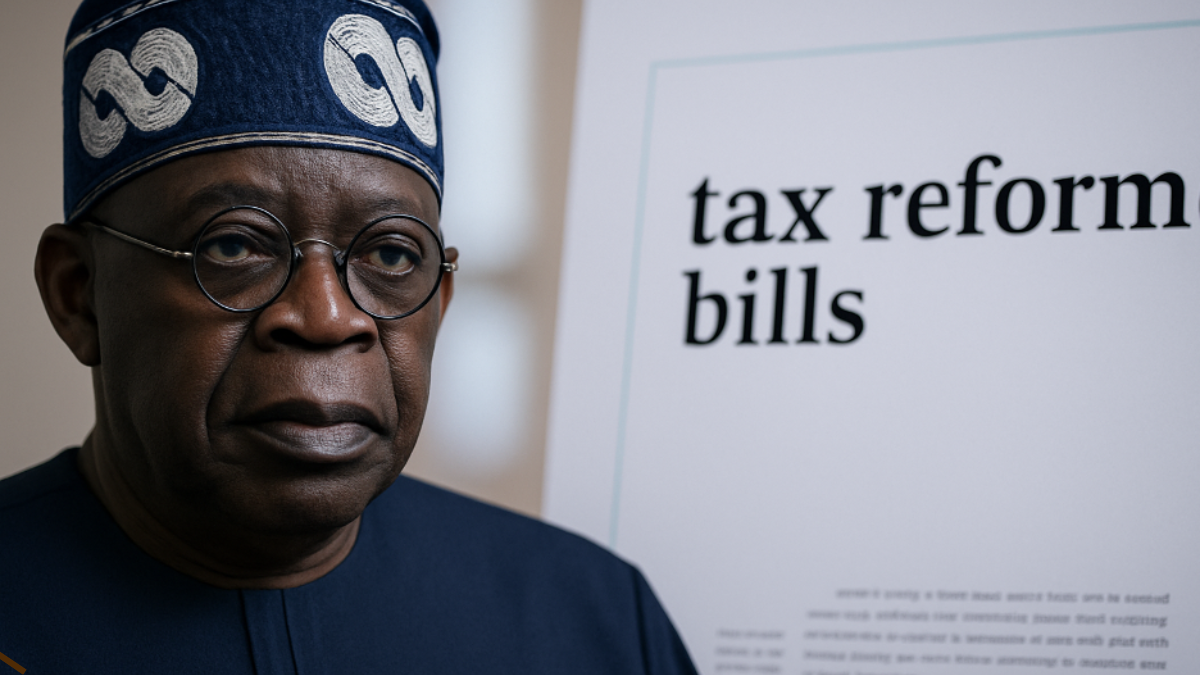
On June 26, 2025, President Bola Ahmed Tinubu signed into law four transformative tax reform bills: the Nigeria Tax Act (NTA), Nigeria Tax Administration Act (NTAA), Nigeria Revenue Service Act (NRSA), and the Joint Revenue Board Act (JRBA). Together, they signal what the presidency calls a “new dawn” in fiscal management. But for everyday Nigerians, the question lingers: is this overhaul a move toward equity or just another polished ploy for elite preservation?
Tax Chaos or Correction?
Let’s be honest, Nigeria’s tax system has never really worked for the average person. A mechanic in Benin City pays more in unofficial road taxes than through any formal channel. Meanwhile, giant corporations rake in billions, expertly dodging taxes with lawyers on standby.
So when Tinubu’s government pledged to clean up this mess, some clapped, some scoffed, most waited. The reforms aim to raise our tax-to-GDP ratio from 10.86% to 18% by 2026. A bold target in a country where most people avoid taxes like potholes.
But here’s the thing: taxes are supposed to mean trust. And for decades, that trust has been missing. People want light before levy. They want their tax receipts to translate into better hospitals, smoother roads, safer streets, not just more headlines about reforms.
What’s New and Who’s Paying More?
There’s something for everyone in the overhaul, if you squint hard enough. Small businesses now get relief: firms earning below ₦100 million in turnover are exempt from Company Income Tax and Capital Gains Tax. This is good news for many family-run shops and local startups.
But then comes the sting. Capital Gains Tax for companies jumps to 30%. A new 4% Development Levy is added on top of existing burdens, even if it merges older levies. In short, while some taxes were renamed or merged, the bill at the bottom hasn’t exactly shrunk.
For medium and large businesses, these changes feel more like a government cash grab than a growth strategy. Entrepreneurs already battling inflation and energy costs now face another cost line marked “reform.”
VAT and the Battle of the Market Woman
The VAT rate remains 7.5%, but the way it works has changed. Businesses are now required to adopt electronic invoicing and fiscal devices. Sounds great in an Abuja boardroom, but try telling a yam seller in Makurdi she now needs a smart invoice app.
Yes, the law exempts essential goods such as rice, garri, and textbooks from VAT. But ask anyone who shops daily: Are prices falling? Not really. Electricity tariffs keep climbing. Fuel remains a luxury. Transportation costs choke daily life.
So while the VAT law is cleaner on paper, it still pinches the people who wake up at 4 a.m. to hustle. And truth be told, reforms that don’t consider Nigeria’s informal economy are reforms destined for elite applause alone.
Personal Income Tax: Break for the Broke, Loopholes for the Rich
The new structure exempts Nigerians earning less than ₦800,000 per year from paying personal income tax. That’s a relief for some. But who’s affected?
The rich rarely make their money through salaries. They cash in on assets, properties, shares, and offshore accounts. And many of those fall through loopholes these reforms don’t quite patch.
Until tax reforms grow teeth to bite into hidden wealth and creative tax dodges, what we have is a system where the rich still escape while the rest of us tighten our belts.
Big Promises for Small Businesses, but Will They Feel It?
SMEs were promised a breath of fresh air. And on paper, they’ve been given one. But Nigeria isn’t run on paper. It’s run on survival.
Ask a tailor in Owerri or a roadside mechanic in Zaria, do they know what exemptions they qualify for now? Most likely not. Implementation and awareness are the real battles.
And while multinationals now face a minimum 15% effective tax, history tells us enforcement tends to chase the low-hanging fruit: local business owners without fancy lawyers.
New Names, Same Game?
The Federal Inland Revenue Service (FIRS) has been renamed Nigeria Revenue Service NRS. State IRS bodies are now independent. A Tax Ombudsman has been introduced to help resolve issues.
But let’s not kid ourselves. A name change is not a behavior change. The average taxpayer still fears tax offices like they do police checkpoints. Unless the culture shifts from intimidation to service, trust won’t follow.
We need a tax system that listens, not one that bullies. That’s how you get people to voluntarily pay taxes, not by adding layers of laws but by building credibility one interaction at a time.
The North-South Revenue Split: Blessing or Time Bomb?
The new VAT sharing formula has states and LGAs receiving 90% of collections. That’s a win for fiscal federalism. But it could also deepen Nigeria’s regional inequalities.
States with big commercial cities like Lagos and Rivers will gain more, while rural states with lower consumption might fall further behind. And with rising tensions over resource allocation, this could be a spark in an already fragile setup.
If not managed well, what was meant to empower could instead polarize.
Reforms on Trial in the Court of Public Opinion
Since the bills passed, resistance has been steady. Labour unions have marched. Business owners have cried foul. Civil society groups are cautious.
Many fear that this is yet another round of cosmetic change laws that look good in donor reports but hurt the struggling masses. Nigeria has been here before. Grand economic plans that end up crushing the poor instead of lifting them.
The streets are watching. The markets are whispering. And the question hangs in the air: Who really benefits?
Inflation Rises, Hope Falls
Government data may celebrate higher revenues, but most Nigerians feel poorer than ever. Prices have gone up, wages haven’t. And now, taxes.
In Lagos, school owners say parents are pulling children out in droves. In Jos, some clinics report patients abandoning treatment halfway due to costs. These aren’t abstract figures. These are lives.
If reforms don’t translate to real impact power that works, roads that last, public schools that teach, then this whole overhaul is just another elite project wrapped in the ribbon of reform.
The Real Test Is Yet to Come
Tinubu’s tax reform is ambitious. Some say brave. Others say it is dangerous. But one thing’s clear: laws alone won’t fix Nigeria’s tax woes.
What matters now is execution. Will the reforms be fairly enforced? Will public officials stop stealing? Will tax offices become centers of transparency rather than terror?
Until then, the 2025 overhaul will remain what many fear it is, just another elite advantage dressed up as economic justice.